Guide · Wearing
How to wear a nugget ring: what each finger means
A Roman writer already complained that men wore rings on every finger but one. Which finger, how wide and how heavy are still the three questions a man asks before his first nugget ring, and each finger comes with its own story.
How do you wear a nugget ring?
Face up, on the finger it was sized for, with the polished band underneath. Choose the finger first, because each one carries its own history and its own size, then a width that suits that finger and a weight you will notice without minding.
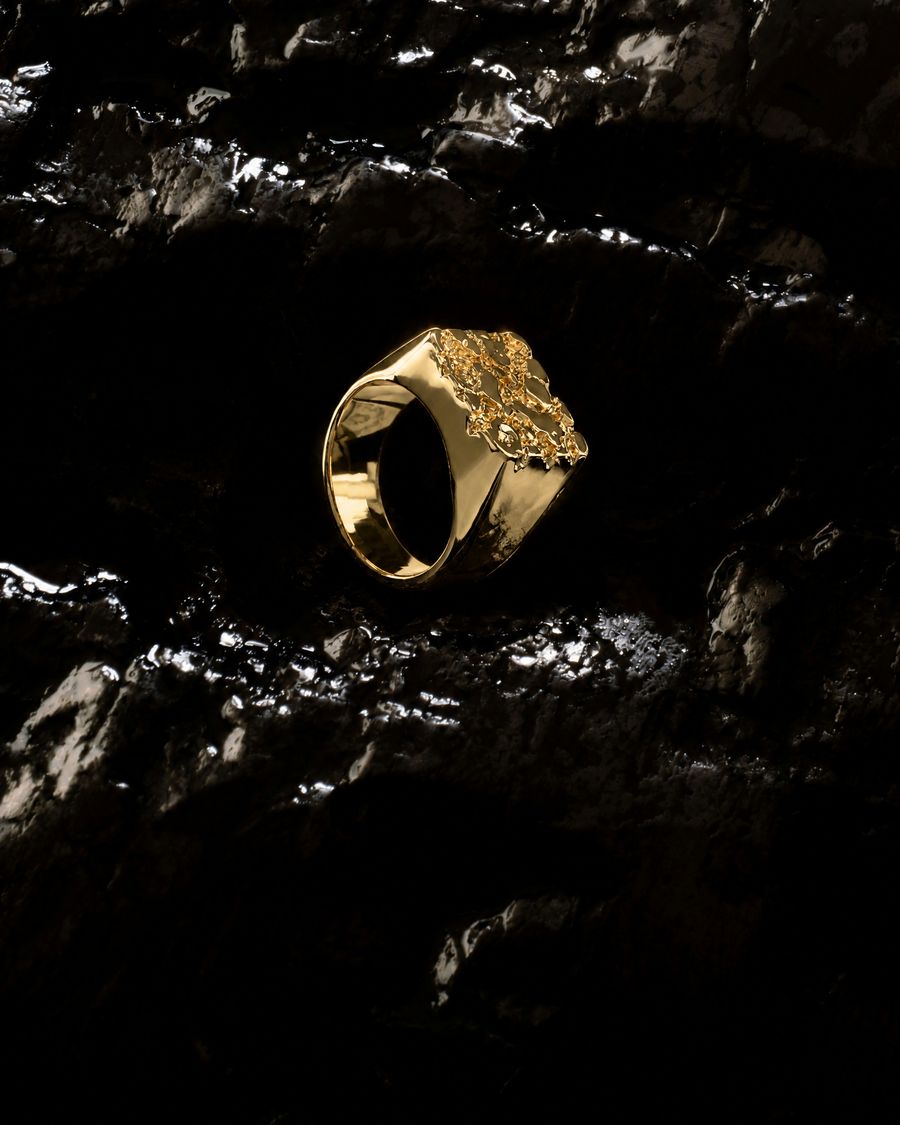
A nugget ring is built like a signet: a raised face of nugget texture on top and a band that narrows under the finger. The face reads from across a table, the band is what you feel. On our rings the face runs from 7.6 mm along the finger on No. 446 Signet XS to 21 mm on No. 404 Oval, and the band underneath stays between 2.3 and 5.55 mm on those two.
Size it on the finger you will wear it on: a ring for the little finger is measured on the little finger, not guessed from your ring size. A wide face also fits tighter than a thin band of the same size; why, and when to go half a size up, is in our guide to nugget ring size.
What does the ring finger mean?
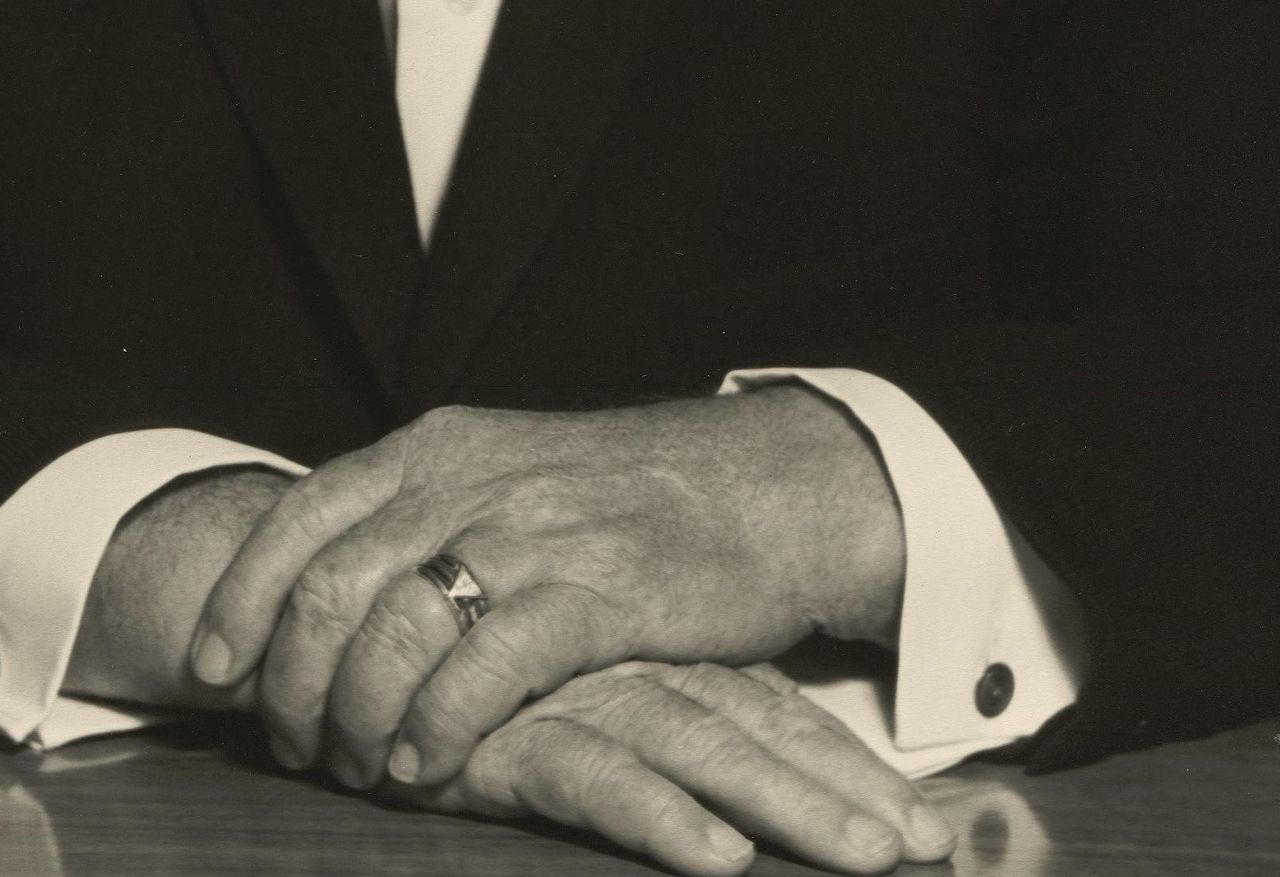
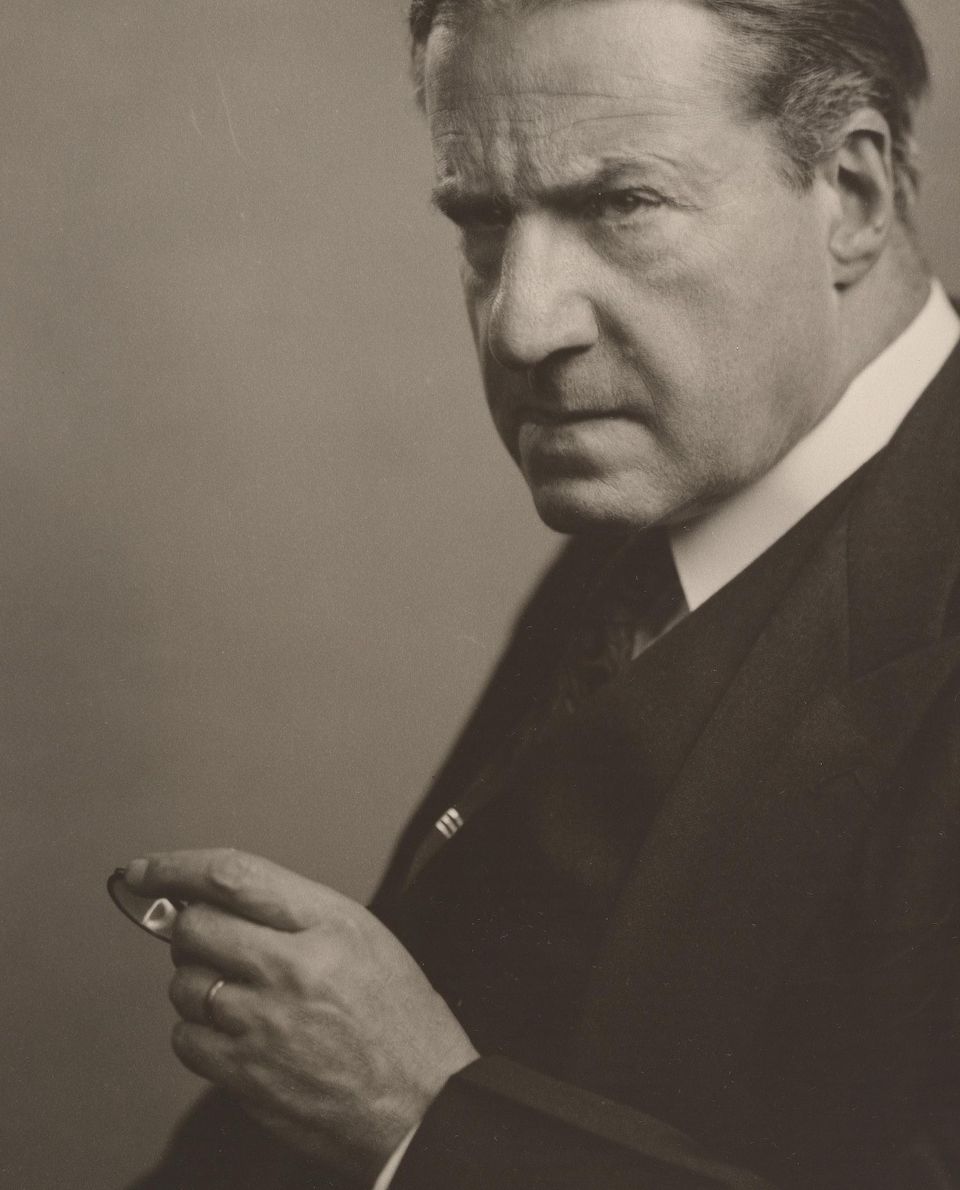
In the United States the ring finger is the wedding finger: the American Heritage Dictionary defines it as “the third finger of the left hand,” counting from the index. A ring there is read as a wedding ring, so a man who is not married, and does not want it read that way, wears his nugget ring on another finger.
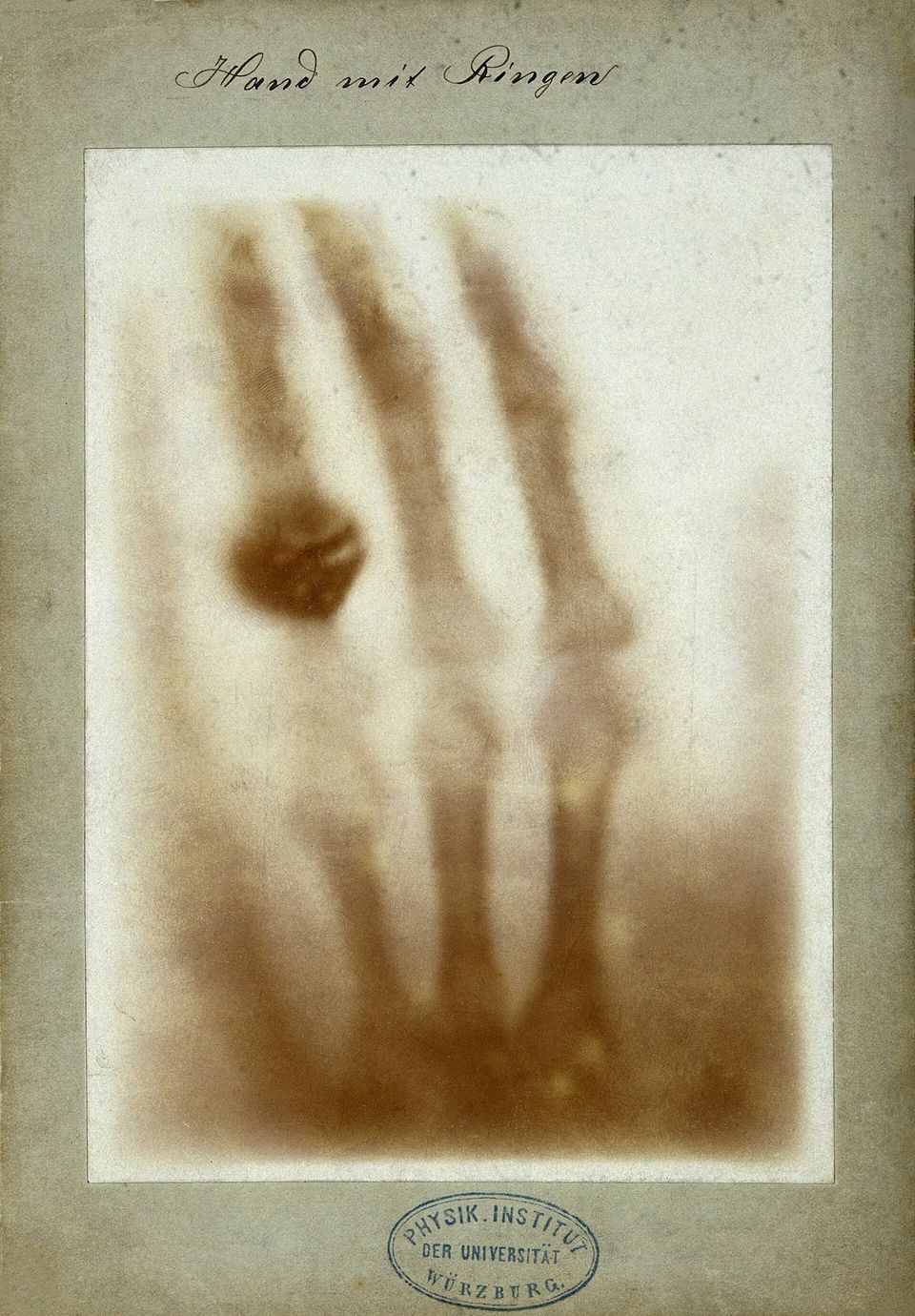
The habit is old. The Roman writer Aulus Gellius noted that the Greeks and Romans wore a ring on the finger next to the little finger of the left hand. He gave the reason he had read in Apion’s books on Egypt: that dissections there had found a very fine nerve running from that finger to the heart, which made it the right place for an ornament.
The nerve became a vein in English. In A Treatise of Spousals, printed in London in 1686, the lawyer Henry Swinburne wrote of “a Vein of Blood which passeth from that fourth Finger unto the Heart, called Vena amoris, Loves Vein.” Neither writer had looked inside a hand himself: both repeat what older books said.
For a wedding band, the nugget face works like any other: No. 441 Nugget Band 6 mm is 6.2 mm wide with the nugget texture all the way round, and it weighs from 8.3 g in 14K at US size 10. In sterling silver it is $350. Also in solid 10K and 14K gold, one price per metal at every size.
What does a ring on the index finger mean?
Historically, the seal and the standing that went with it. The index was a signet finger: the Victoria and Albert Museum notes that portraits of the 1500s and 1600s show signet rings worn on the forefinger or the thumb, probably so the ring could be turned onto the wax. Today a ring there has no fixed message; it is the finger that shows a ring most.
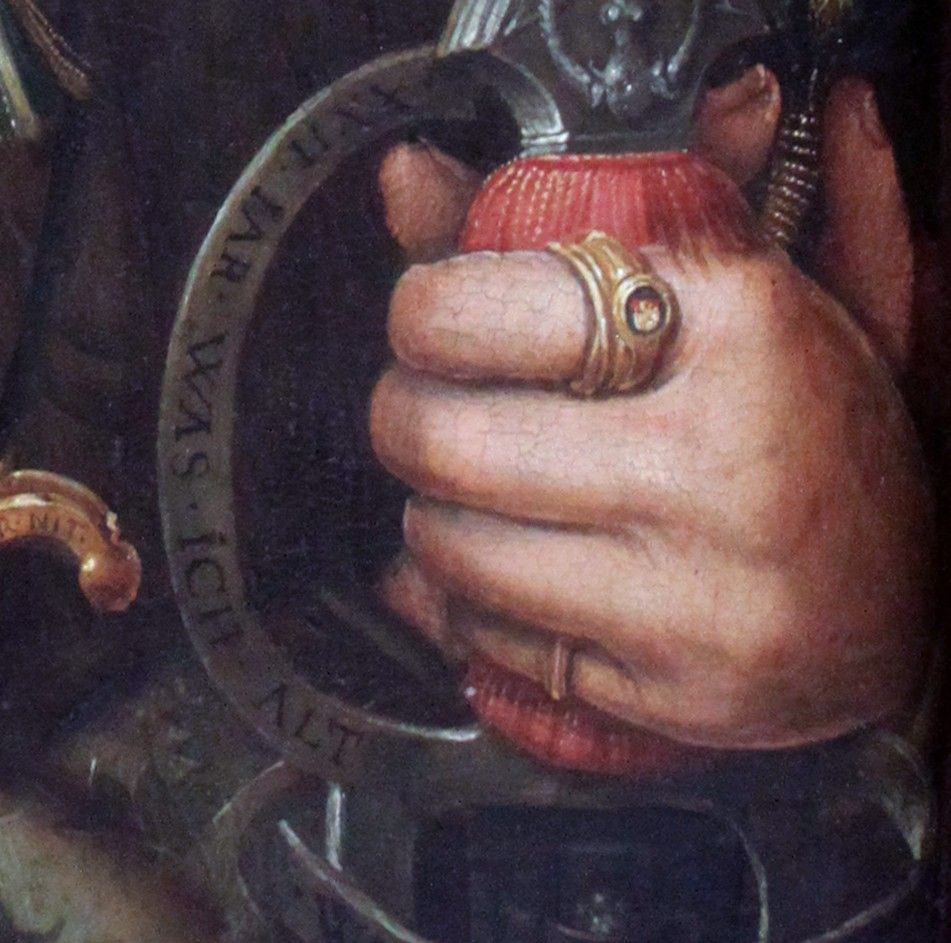
The Romans had moved there first. Pliny the Elder says in his Natural History that rings were at first worn on the finger next to the little finger only, “and this we see the case in the statues of Numa and Servius Tullius”; later “it became the practice to put rings on the finger next to the thumb, even in the case of the statues of the gods.”
One wedding custom still uses that finger. In a traditional Jewish ceremony the groom places the ring on the bride’s index finger, not her ring finger. Maurice Lamm gives two reasons in his account for Chabad.org: the pointing finger lets her show the witnesses she received it, and, in the words of Maharam Mintz, “the index was once the ring finger.”
For a man, the index takes a broad face well, because nothing sits beside it on the thumb side. No. 409 Signet M has a square face 10.95 mm along the finger; No. 014 The Block is 15.3 mm and weighs from 20.1 g in 14K at US 10. What a signet is, from Egypt to New York in 1864, is told in what is a signet ring.
What does a ring on the middle finger mean?
Nothing fixed, and that is its use: no wedding, office or club claims the middle finger, so a ring there says only that you chose it. Pliny noted that in his Rome it was the one finger left bare, while “among the peoples of Gallia and Britannia, the middle finger, it is said, is used for this purpose.”
It is the longest finger, at the center of the hand. Measure it on its own: a size taken on the ring finger will not fit it. A face that is tall rather than wide stays out of the way of the fingers on either side; the measures of each ring, the face along the finger and its height above it, are on its page.
What does a thumb ring mean?
Its oldest meaning is practical: the archer’s ring. The Metropolitan Museum of Art describes archery rings as worn on the thumb of the archer’s release hand to protect it from the bowstring. In Qing China the jade archer’s ring, the banzhi, also became something men wore off the archery field.
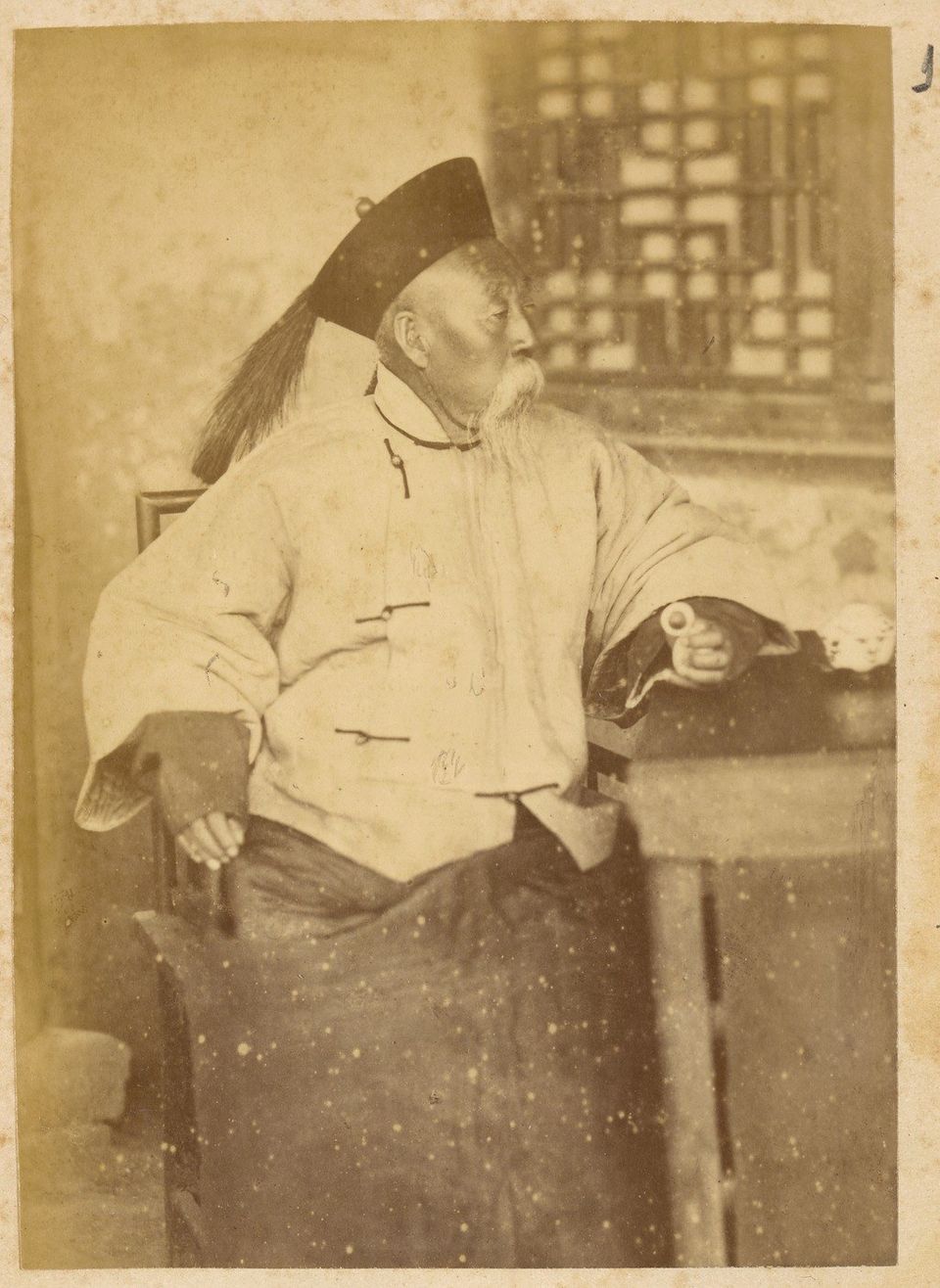
The thumb was a signet finger too: it is the other place the V&A sees signets worn in portraits of the 1500s and 1600s. A thumb is thick at the base and short, so a ring there wants a low face that will not catch when the hand grips. Measure the thumb itself, at the base.
And the little finger?
The little finger has the longest list of meanings: the place of the family signet in Britain, of the engineer’s ring in Canada and the United States, of the gangster in films. All of it, with the sources, is in what does a pinky ring mean.
It is also the finger that suits a small face: No. 405 Pinky was made for it, with a cushion face 9.75 mm along the finger, and weighs from 7.5 g in 14K at US 10.
How wide should a man’s nugget ring be?
Match the width to the finger and the hand. A slim band of 5 to 6 mm sits on any finger and next to a wedding band; 8 to 10 mm reads as a man’s band from across a room; a signet face of 15 mm or more is a statement best kept to the index, the middle finger or a large hand.
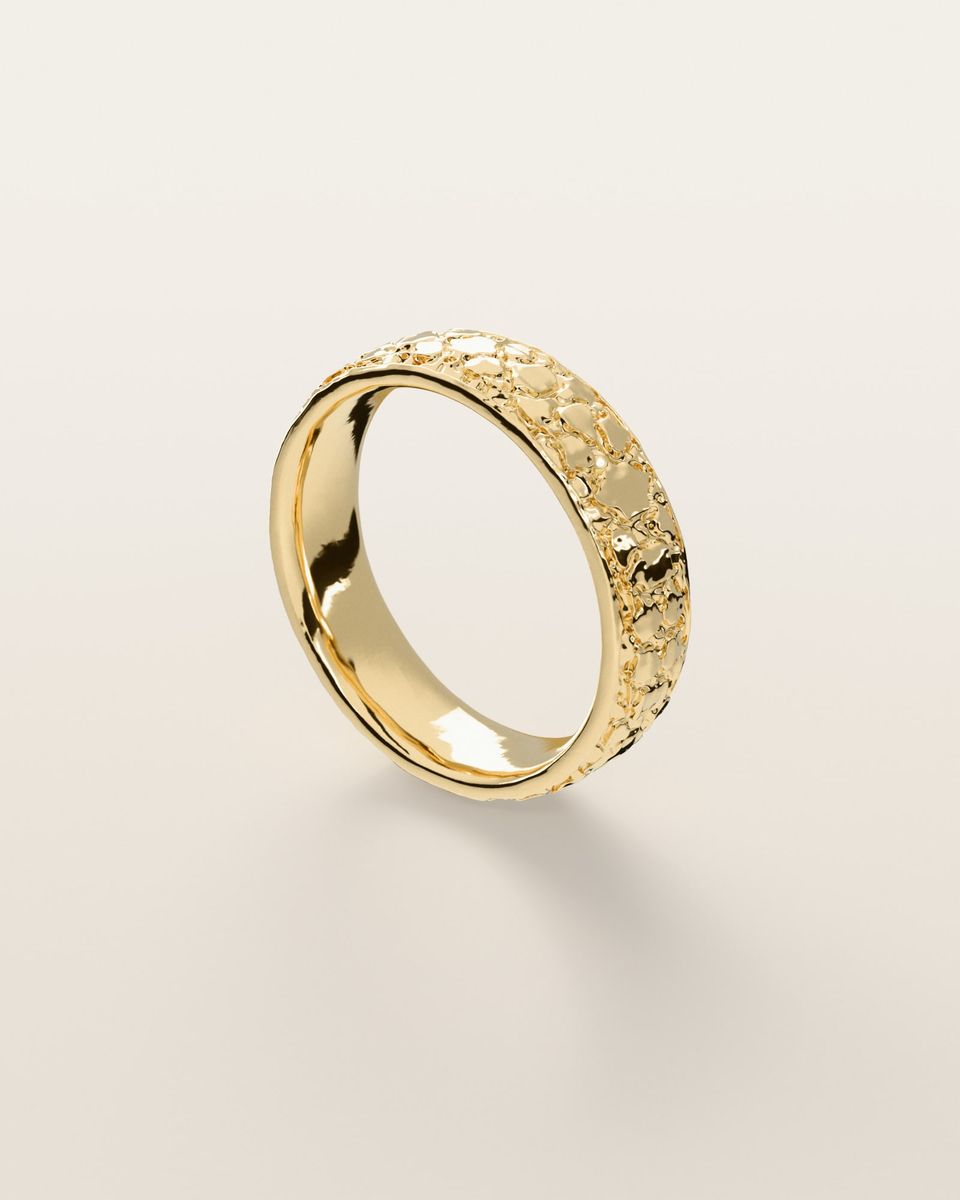
Our bands give the steps: No. 024 Slim at 5.5 mm, No. 441 Nugget Band 6 mm at 6.2 mm, No. 442 Nugget Band 8 mm at 8.4 mm and No. 443 Nugget Band 10 mm at 10.5 mm. A signet is wide only on top: No. 014 The Block is 15.3 mm across the face and 6.95 mm under the finger.
How heavy should a man’s nugget ring be?
Heavy enough that you feel it on the hand, and solid, never hollow. In 14K at US size 10, No. 024 Slim weighs from 8.1 g, No. 441 Nugget Band 6 mm from 8.3 g and No. 014 The Block from 20.1 g.
The Romans already argued about it. Pliny writes that “some, too, make a parade of the weight of their rings, while to others it is quite a labour to wear more than one at a time,” and that some made “the hoop of gold tinsel, and fill it with a lighter material than gold.” Hollow rings are as old as that. How to tell a solid head from a hollow one is in solid vs hollow nugget rings, and every weight at every size in nugget ring weight.
How many rings should a man wear?
One is enough to start, and two or three when they share the work: one face, then bands. Pliny’s Rome went from a single ring to every finger but one, “smaller rings even being separately adapted for the smaller joints of the fingers,” and he did not mean it as praise.
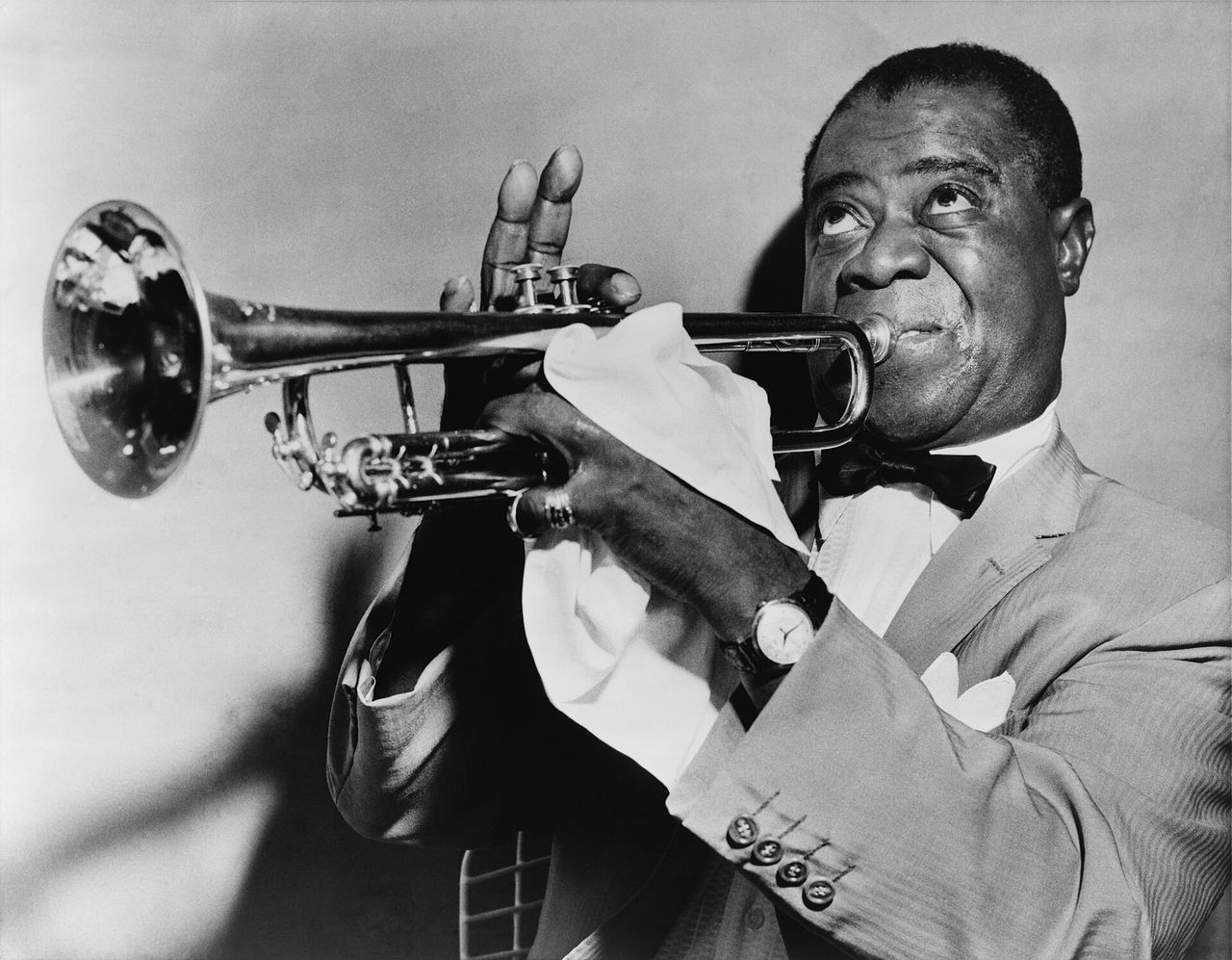
Two wide faces on neighboring fingers knock together and fight for the eye. A signet on the index and a slim band on the little finger of the same hand do not. A wedding band stays on its own finger, alone or stacked with a band of the same width.
Every ring here is cast to order in your size by our workshop, in solid 14K gold, solid 10K gold or sterling silver. Everything else to check before buying any nugget ring is in the nugget ring buying guide.
Everything else to check before you buy is in the nugget ring buying guide.
Sources
- The American Heritage Dictionary of the English Language, 5th ed., ring finger: “The third finger of the left hand.” Read 8 November 2026.
- Aulus Gellius, Attic Nights, book X, chapter 10, Loeb Classical Library, 1927, on LacusCurtius (public domain): the ring on the finger next to the little finger of the left hand, Apion and the nerve to the heart. Read 8 November 2026.
- Henry Swinburne, A Treatise of Spousals, or Matrimonial Contracts, London, 1686, Internet Archive scan: “Vena amoris, Loves Vein.” Read 8 November 2026.
- Pliny the Elder, The Natural History, book XXXIII, chapter 6, translated by John Bostock and H. T. Riley, 1855, Perseus Digital Library: the fingers the Romans wore rings on, the weight of rings, hollow hoops. Read 8 November 2026.
- Victoria and Albert Museum, Signet ring, England, 1400-1500 (M.205-1975): signet rings on the forefinger or the thumb in portraits of the 1500s and 1600s. Read 19 October 2026.
- Maurice Lamm, The Marriage Ring, Chabad.org: the ring on the bride’s index finger, Abudarham and Maharam Mintz. Read 8 November 2026.
- The Metropolitan Museum of Art, Archer’s Ring, 17th century, nephrite (52.119.6): worn on the thumb of the release hand against the bowstring; and Archer’s thumb ring, China, Qing dynasty, 18th century (02.18.881). Read 8 November 2026.
- Library of Congress, World Digital Library 4137, Old Manchu Gentleman in Padded Silk Jacket and Gown with a Jade Archer’s Ring (Banzhi) on His Left Thumb, photograph by Adolf Nikolay Boyarsky, 1874-75, image and record via Wikimedia Commons. Read 8 November 2026.
- National Portrait Gallery, Smithsonian Institution, Oscar White, Pach Brothers Studio, James Cash Penney, c. 1947, and Pach Brothers Studio, Stephen Samuel Wise, c. 1940. CC0.
- Library of Congress, New York World-Telegram & Sun collection, Louis Armstrong, 1953, restored copy via Wikimedia Commons. Public domain.
- Städel Museum, Frankfurt, Hans Holbein the Elder, Portrait of a Member of the Weiss Family of Augsburg, 1522, image via Wikimedia Commons. Read 8 November 2026.


