Guide · Wearing
What does a pinky ring mean?
In Canada, an engineer’s little finger carries a ring that was first made of iron. In Britain it carries the family signet. On television in 2000 it carried the ring Tony Sirico wore as Paulie Walnuts. The same finger has meant very different things, and most of them are written down.
What does a pinky ring mean?
It means what the ring is. A family signet on the little finger of the left hand is a British custom; a plain metal band on the little finger of the working hand marks an engineer in Canada or the United States; a gold ring with no office behind it is a choice of style, which is what most pinky rings are today.
The word itself is plain. The American Heritage Dictionary gives pinkie as an informal name for the little finger, “probably from Dutch pinkje,” the small form of pink, little finger. Everything else about the pinky ring comes from the people who wore one, in the order below.
1st century AD: why did Romans wear rings on the little finger?
For fashion first, and for show. Pliny the Elder, in the Natural History he dedicated to Titus, son of the emperor Vespasian, writes that rings moved from the fourth finger to the index, and “more recently, again, it has been the fashion to wear them upon the little finger as well.”

He did not approve. “Some there are who heap several rings upon the little finger alone,” he goes on, while others wear only one there: the ring that seals the cabinet where the real signet ring is kept, “too precious to be worn in common use.” A single ring on the little finger, in his words, was “an ostentatious advertisement that the owner has property of a more precious nature under seal at home.”
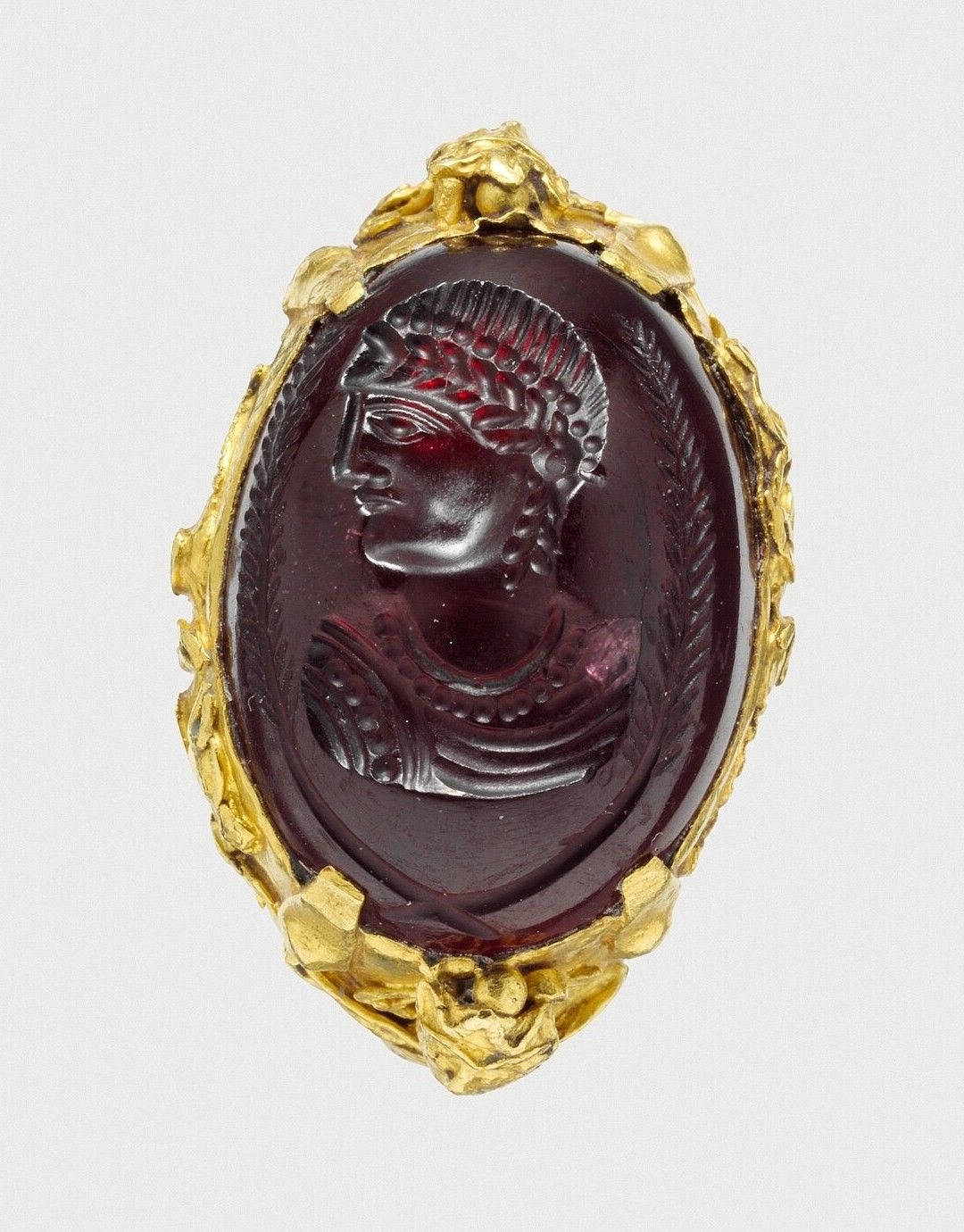
The idea that the little finger shows standing never quite left. How the signet itself worked, from Egyptian kings to a New York jeweler of 1864, is in what is a signet ring.
1922: why do Canadian engineers wear an iron ring?
As a reminder of their duty. The Canadian Encyclopedia dates the tradition to 1922, when engineers in Montreal met to talk about their profession and turned to Rudyard Kipling for a ritual. The ring is worn on “the baby finger of the working hand,” the right hand for a right-handed engineer.
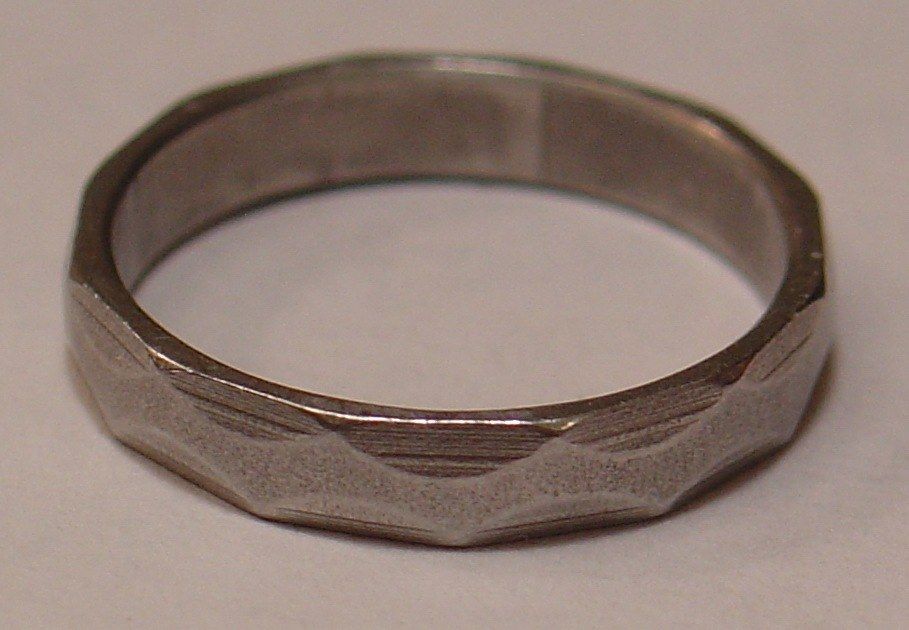
The ceremony is the Ritual of the Calling of an Engineer, held in private ceremonies at 25 “Camps” across Canada (as of the article’s last edit, in 2014) and run by the Corporation of the Seven Wardens. The encyclopedia says the first rings were made of iron by patients at a veterans’ hospital in Toronto; because iron turns the finger black and wears away, most are now stainless steel.
Two things the ring is not. It is not a degree: wearing it does not show a qualification or membership. And the story that the first rings came from the wreck of a collapsed bridge is, in the encyclopedia’s word, a misconception.
1970: what is the engineer’s ring in the United States?
The ring of the Order of the Engineer, a stainless steel band given to engineers who take its Obligation. The Order held its first ceremony on June 4, 1970, at Cleveland State University, and says its Obligation is similar to the Canadian ritual.
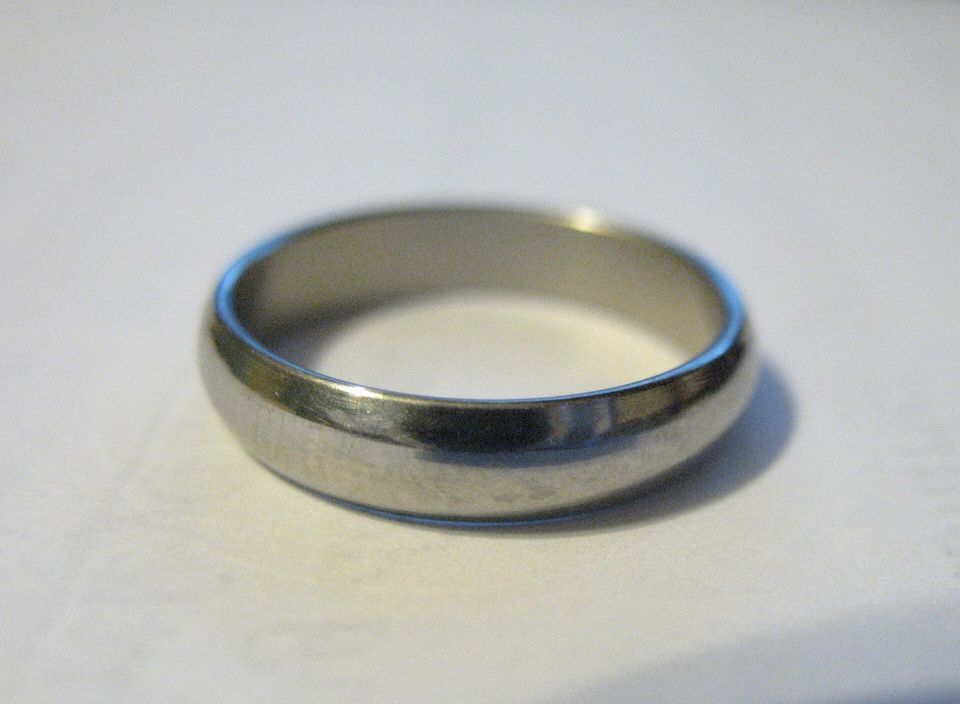
The Obligation opens with the words “I am an Engineer.” New York University’s engineering school says the ring “is worn on the little finger of the working hand” and is made of stainless steel “so it will not rust,” and that inductees asked what it means answer with one word: ethics.
So a plain steel or iron band on a man’s little finger, on the hand he writes with, may well be a promise rather than jewelry. A gold ring on the same finger carries no such vow.
2000: is a pinky ring a gangster thing?
It is one of its roles on screen, not its meaning. When The New York Times looked at the pinky ring in January 2000, it started with the actor Tony Sirico, who had worn his own for 30 years, including as Paulie Walnuts in The Sopranos: “They say Mafia wear pinkie rings, but men of style wear pinkie rings.”
The same article found the ring at the other end of the scale. In the film The Talented Mr. Ripley, it noted, pinky rings stand for the high-born life Tom Ripley wants. The Duke of Windsor wore one. The comedians of the televised Dean Martin roasts of the 1970s, from George Burns and Milton Berle to Jack Benny, Jackie Gleason and Bob Hope, told their jokes “with pinkies flashing.”
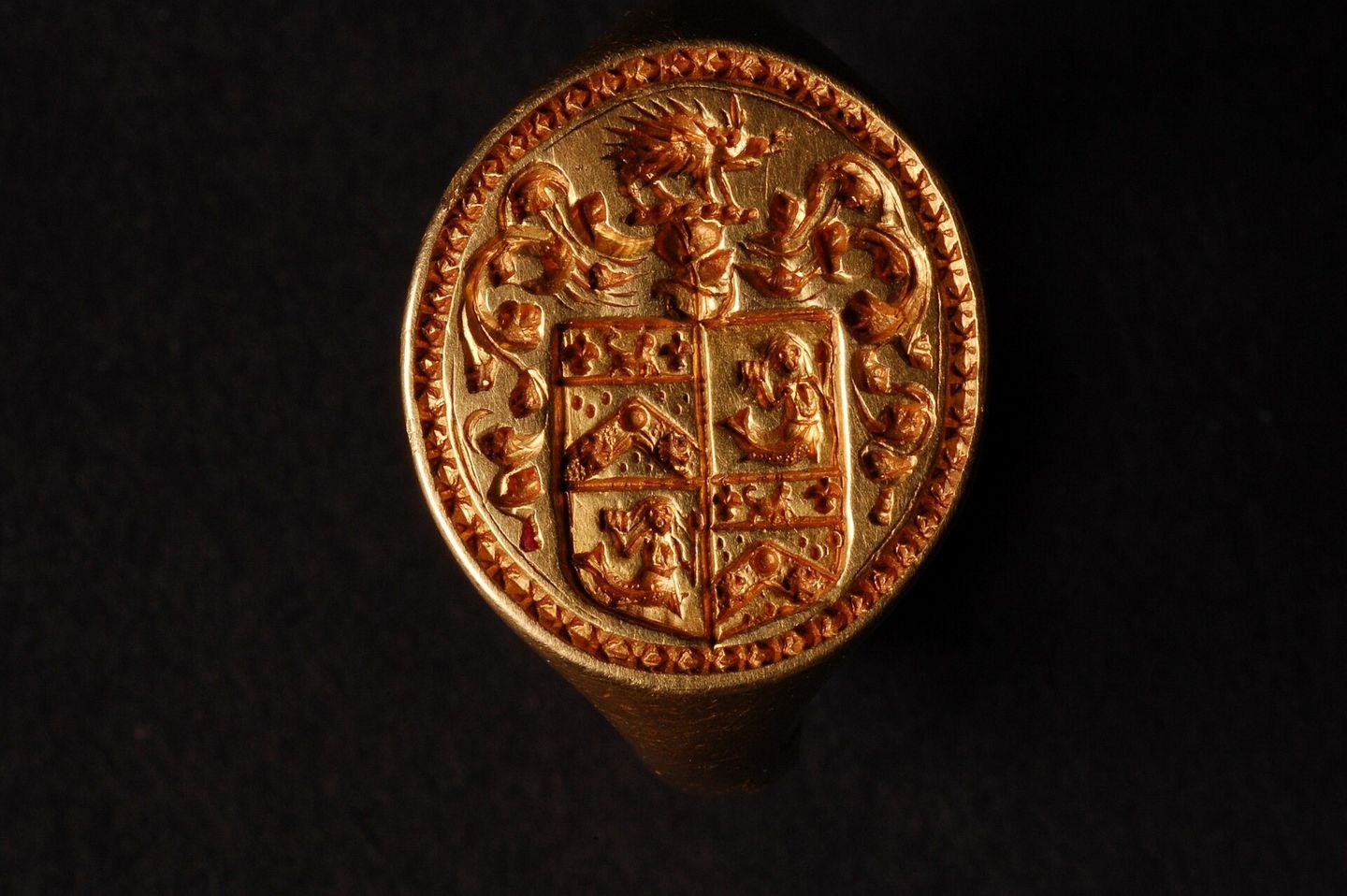
The article also gave the practical reason: signet rings, used to stamp a crest into wax, were “worn on the pinkie, an easy finger to extend.” The gangster is a costume. The ring was there before him.
2024: which hand does a signet go on?
The left, on the little finger, unless you are left-handed. That is the British rule as The Field put it in October 2024: “Everyone agrees it should be your left hand (unless you are left-handed) and that it should be on the little finger.”
Asked why, the secretary of the Heraldry Society, John Tunesi of Liongam, told the magazine: “There’s no firm reason for this, it’s just tradition that’s accrued over many years.” The engineers wear theirs on the working hand; the signet goes on the other one. For a gold ring worn for itself, either hand is right, and the size is taken on the finger it will be worn on.
Why do men wear pinky rings?
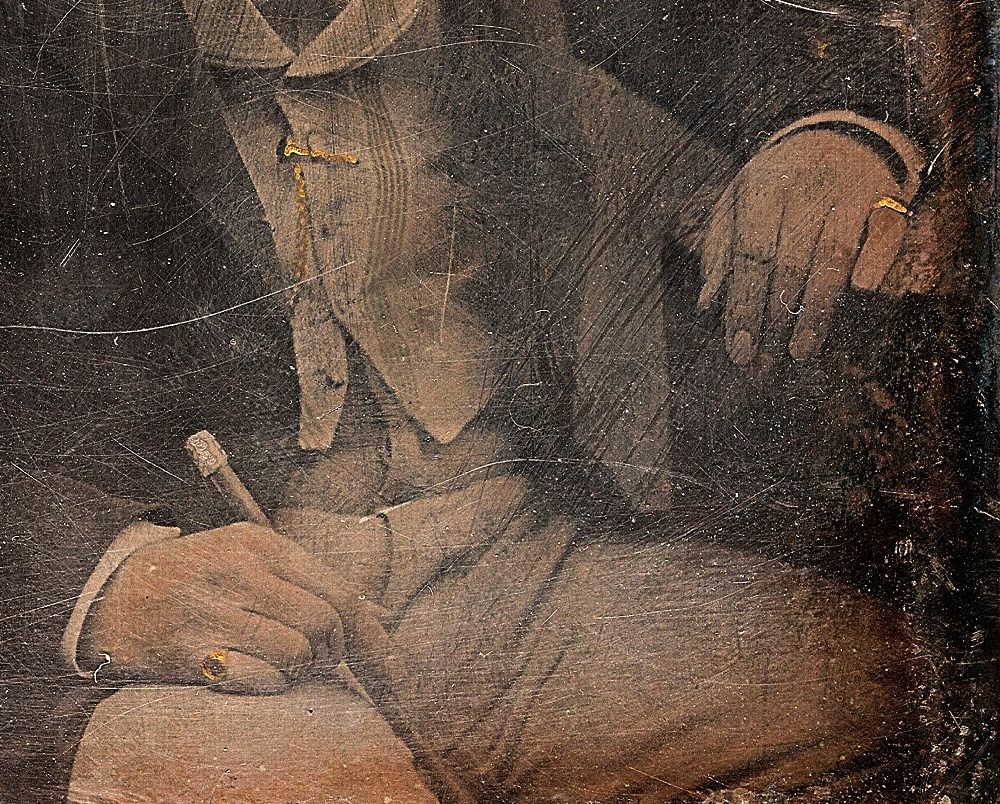
For three reasons the record keeps giving: a seal or a crest that came down in the family, a vow taken on graduation, and plain style. The little finger is also the one that leaves the others free: it was “an easy finger to extend” when a signet still had to meet the wax.
The style reason is the oldest one written down: Pliny’s Romans wore rings there because it had become the fashion. It is also the one the comedian Alan King gave The New York Times about the 1970s roasts: he recalled that cat’s-eye and star sapphires were the stones to have, and that “everyone looked to see the best star.” A nugget face is the all-gold version of that habit, texture where the stone would be.
Which of our rings are made for the little finger?
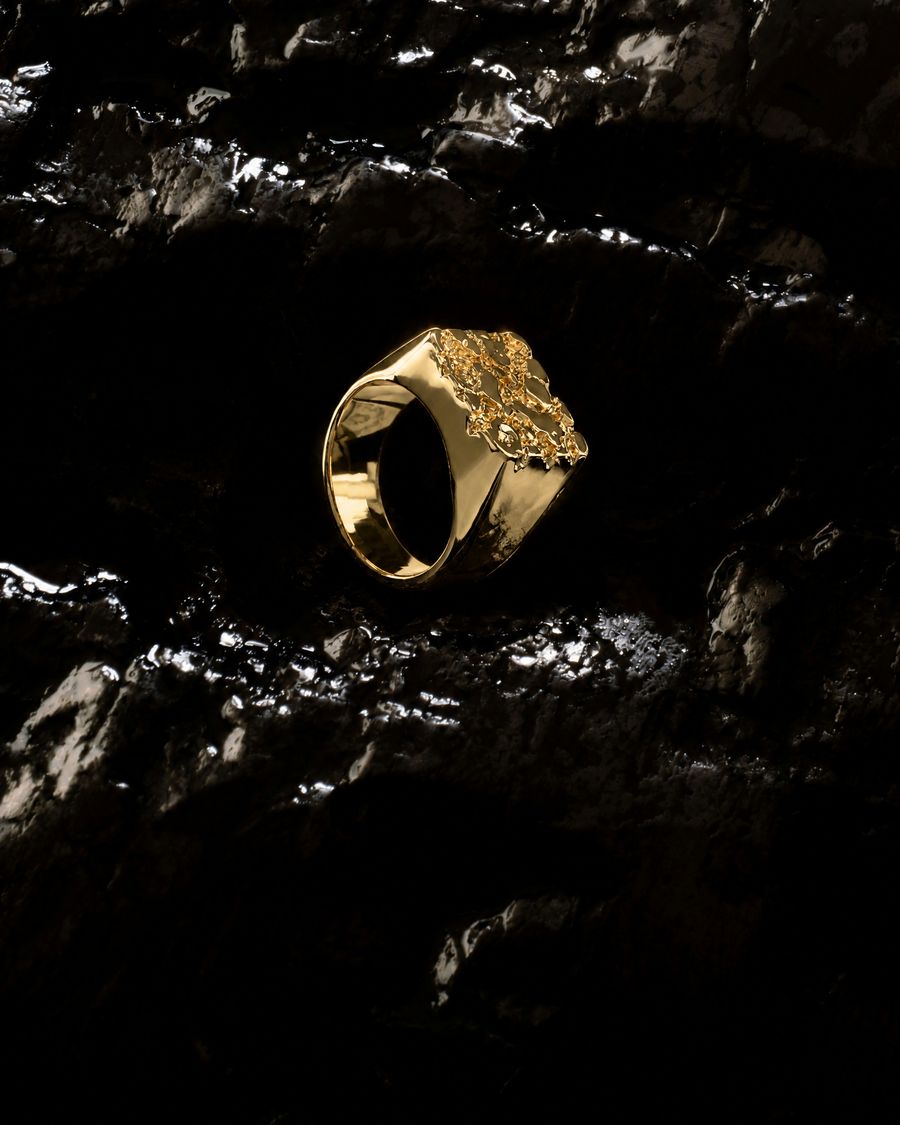
No. 405 Pinky, made for it: a cushion face of nugget texture 9.75 mm along the finger, on a sturdy polished band. The smallest of our signets, No. 446 Signet XS, with a square face of 7.6 mm, fits it too.
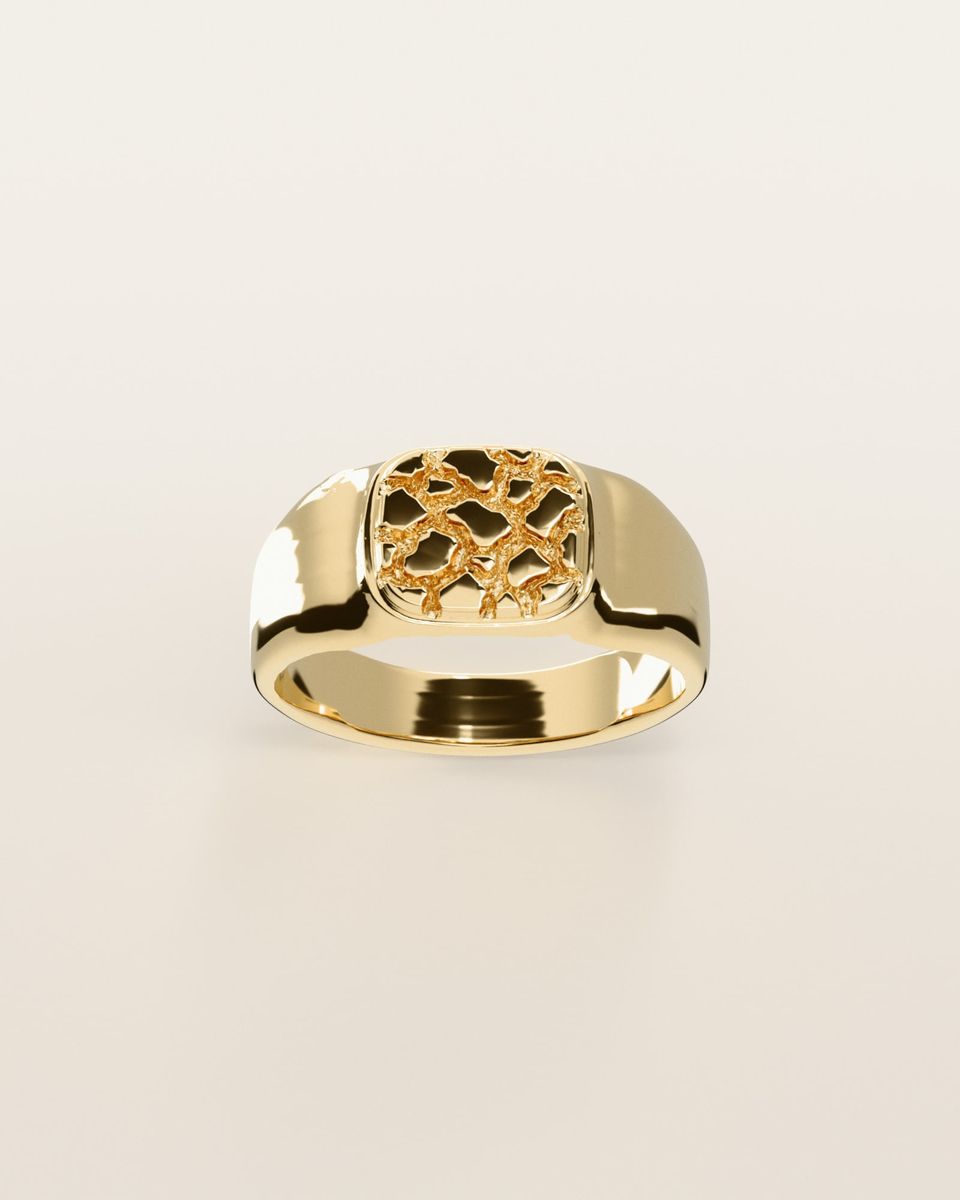
No. 405 Pinky weighs from 7.5 g in 14K at US size 10. In sterling silver it is $345. Also in solid 10K and 14K gold, one price per metal at every size. For a lower profile, No. 533 Ingot puts a small bar of nugget texture, 6.8 mm along the finger, on a plain band, and No. 024 Slim is a 5.5 mm band with the texture all the way round.
Each ring is cast to order in your size by our workshop. Which finger suits which width, and what the other fingers mean, is in our guide to how to wear a nugget ring.
More on the same subject: how to wear a nugget ring.
Sources
- The American Heritage Dictionary of the English Language, 5th ed., pinkie: “The little finger. [Probably from Dutch pinkje, diminutive of pink, little finger.]” Read 8 November 2026.
- Pliny the Elder, The Natural History, book XXXIII, chapter 6, translated by John Bostock and H. T. Riley, 1855, Perseus Digital Library; dedication to Titus in the preface. Read 8 November 2026.
- Laura Neilson Bonikowsky, Iron Ring, The Canadian Encyclopedia, published 7 February 2006, last edited 28 January 2014. Read 8 November 2026.
- Order of the Engineer, History and Obligation. Read 8 November 2026.
- NYU Tandon School of Engineering, The Order of the Engineer: A Ring, A Promise and a Community, 30 July 2026. Read 8 November 2026.
- Ilene Rosenzweig, “Ba-Da-Bing! Thumbs Up for the Pinkie Ring”, The New York Times, 23 January 2000 (read in the Internet Archive’s copy). Read 8 November 2026.
- Harry Wallop, “The signet ring: why is it making a comeback?”,The Field, 28 October 2024. Read 8 November 2026.