Guide · History
What is a nugget ring?
The name describes the surface, not the metal. Two rings can share the same lumpy top and be 14K gold, sterling silver or plated brass. What follows is what the word means, how the rings are made, and what the record shows about when they took off.
What is a nugget ring?
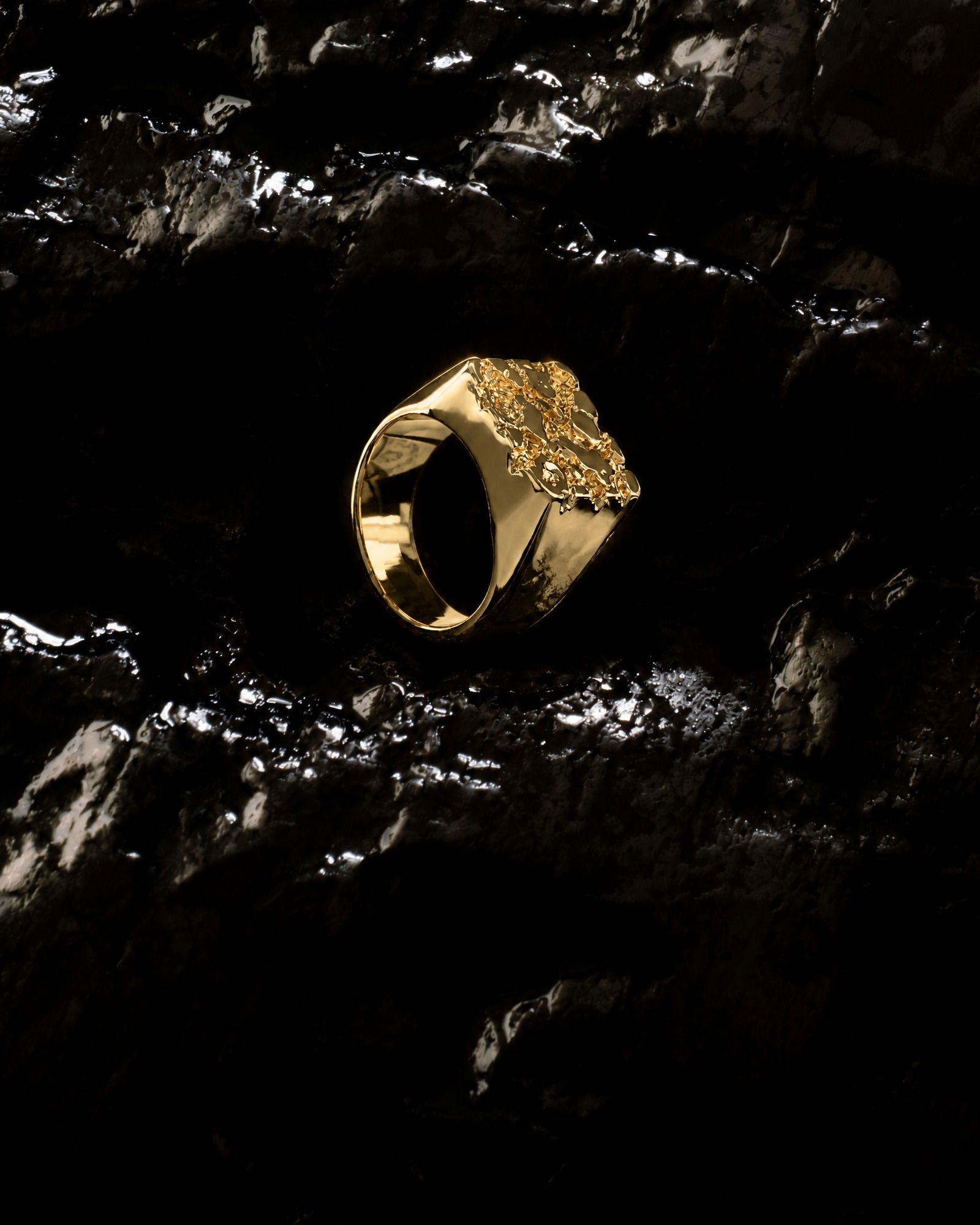
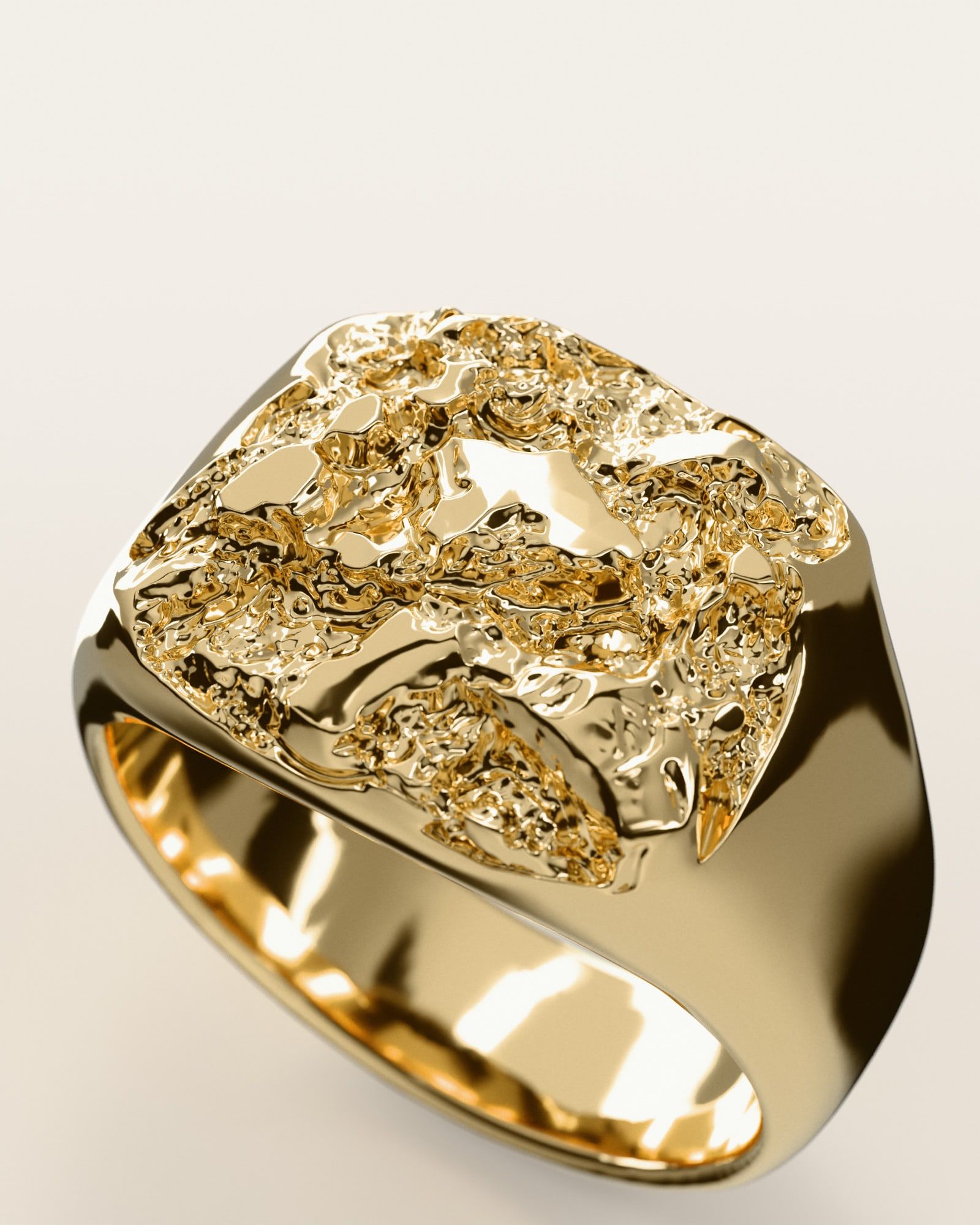
A nugget ring is a ring whose top is shaped to look like a lump of natural gold: raised bumps, small hollows and uneven edges. Most are cast in one piece from a model of that texture. Some older pieces are made the other way, with real gold nuggets soldered onto a ring.
The texture can cover a square signet face, an oval head or the whole band, and it can sit next to polished areas or stones. A jeweler’s listing usually says “nugget style” or “nugget design” for the cast kind.
Why is it called a nugget ring?
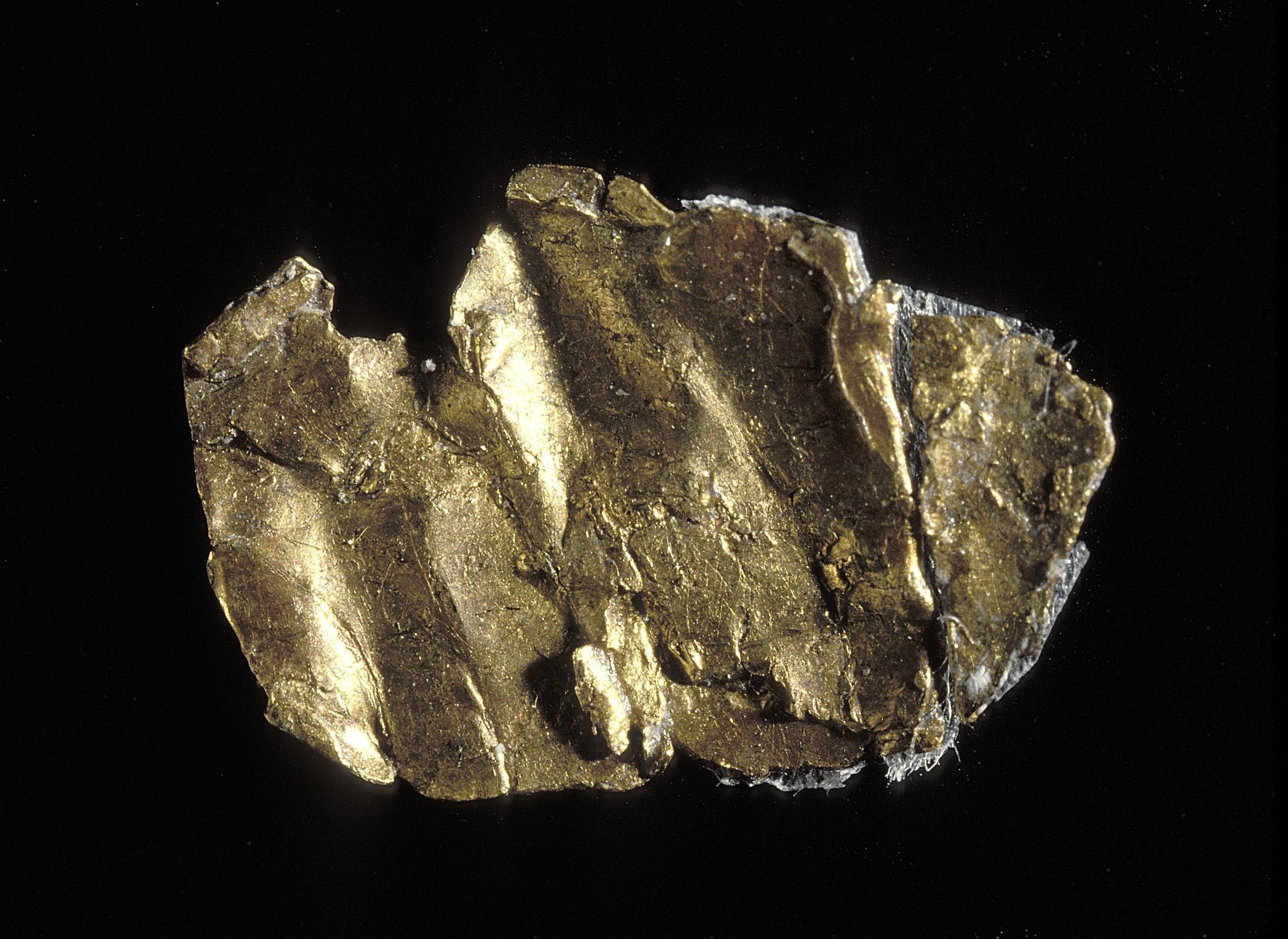
Because its surface copies a gold nugget, the rounded lump of gold that prospectors find in streams. The word was already used for rings in 1971: Kay Jewelers’ Christmas catalog that year sold a “rugged golden nugget style ring” in 14K gold.
“Style” is the important word. On a cast ring, the bumps and hollows are a design: someone models them, the model is cast, and every ring from it has the same pattern. The same nugget pattern can be cast in gold or in silver.
Cast nugget or real nuggets: what’s the difference?
A cast nugget ring is one piece of metal with a nugget texture. A natural-nugget ring is built from real nuggets, small irregular pieces of gold set on a ring. The first tells you nothing about where the gold came from; the second tells you nothing about its karat.
Natural gold is not pure gold. It is an alloy, usually with silver, and its fineness varies from one deposit to another, as the US Geological Survey’s study of native gold explains. So “real gold nuggets” on a listing still needs a karat. Jewelry made from natural nuggets is much older than the cast ring.
Whatever the kind, the questions before buying are the same: the karat, the weight, and what is under the top. The nugget ring buying guide takes them in order.
When were nugget rings popular?
The cast nugget ring was a mainstream jewelry-store item by 1971, and nugget gold was still sold in national catalogs in the mid-1980s. Those are the dates the printed record supports; we found no period source that names an inventor or a peak year.
Two catalogs, both readable online:
- 1971. Kay Jewelers’ Christmas catalog, page 29, “Ring Ideas”: a nugget style ring in 14K gold with a synthetic birthstone, $69.95, photographed next to signet and onyx rings.
- 1984. Sears’ Christmas Wish Book, page 106, “Notes of 14K gold”: a nugget bracelet at $269.99 until December 31, $599.99 after.
The same year as that Kay catalog, on August 15, 1971, the United States stopped converting dollars into gold at the fixed price of $35 an ounce, according to the Federal Reserve’s history of the decision. From then on the gold price could move. We don’t know of a source that links the two, so we only note the date.
What does a nugget ring symbolize?
There is no fixed code. A nugget is gold as it comes out of the ground, so the shape reads as gold before anything else, and people give it their own meaning: a first big paycheck, a family ring, a shape they like.
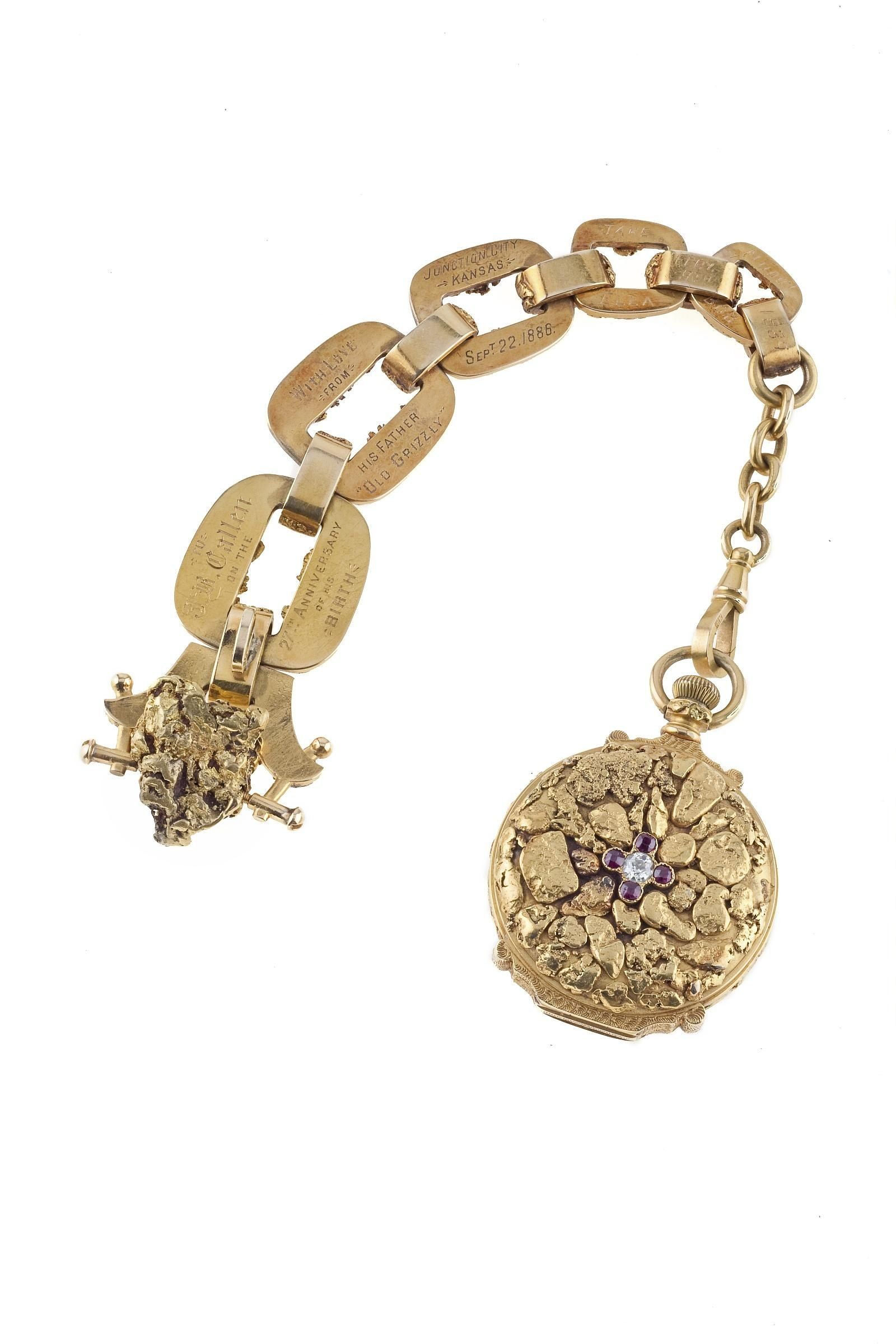
The Callen pieces above show one of the oldest meanings. Callen made his fortune guiding expeditions to the gold fields of Colorado, Arizona and Nevada, taking a share in the mines he helped find. The Smithsonian notes that the nuggets on the watch and chain are believed to come from one of those mines. He had the chain engraved “with love from his father ‘Old Grizzly’”: gold from his own luck, given to his children.
You can’t read someone’s story from the ring on their hand. You can read the metal: if a nugget ring matters to you because it is gold, check that it is, with the steps in how to tell if a nugget ring is real.
How are nugget rings made today?
Almost all are cast. The texture is modeled, by hand in wax or on a computer, then the model is cast in metal and the ring is finished: high points polished, recesses cleaned. Ours are modeled as 3D files and cast to order in your size by our workshop. A cast ring can be solid under the head or hollowed out to save metal; that difference doesn’t show from the top, which is why it has its own guide:solid vs hollow nugget ring.
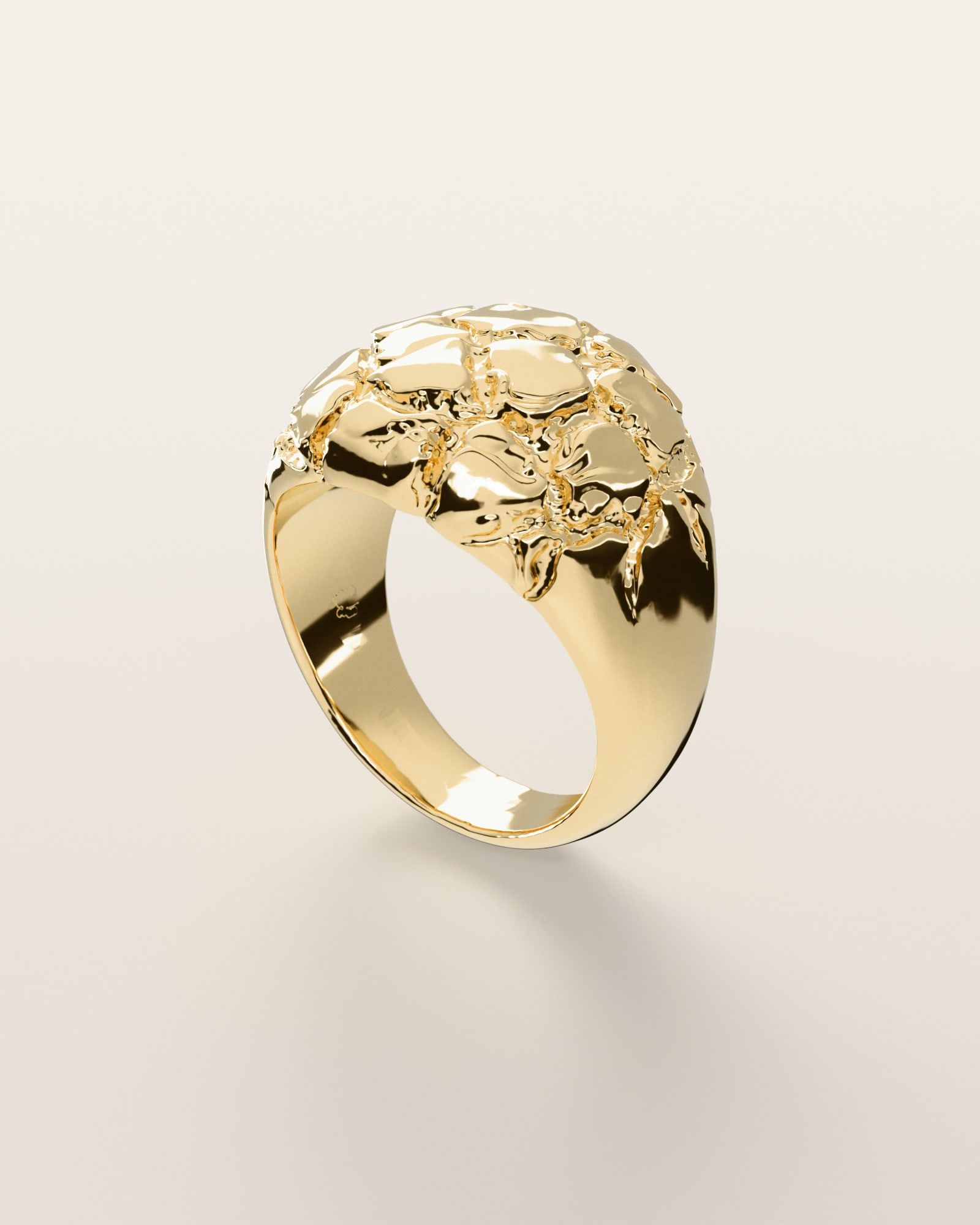
All our designs in one place: gold nugget rings.
Everything else to check before you buy is in the nugget ring buying guide.
Sources
- Kay Jewelers, Christmas Catalog 1971, page 29, “Ring Ideas”, item G. Internet Archive scan, read 18 October 2026.
- Sears, Roebuck and Co., 1984 Christmas Wish Book, page 106, “Notes of 14K gold”, item 28. Internet Archive scan, read 18 October 2026.
- Federal Reserve History, Nixon Ends Convertibility of U.S. Dollars to Gold and Announces Wage/Price Controls (August 15, 1971; $35 an ounce).
- R. S. Jones and M. Fleischer, Gold in minerals and the composition of native gold, US Geological Survey Circular 612 (1969).
- Smithsonian, National Museum of American History, Gold Nugget (Sutter’s Mill, 1848) and 1886 Gold Nugget Watch and Fob (Callen family). Records and images CC0, read 18 October 2026.