Guide · Style
Cowboy rings: what makes a ring western
A cowboy ring is easier to recognize than to define: wide, a little heavy, made to be seen on a hand that holds reins or a steering wheel. Behind the look are three real histories, the vaqueros who taught the West to work cattle, the Navajo silversmiths of the Southwest, and the gold rushes of Arizona and California.
What are cowboy rings?
Cowboy rings, or western rings, are men’s rings made in the look of the ranch and the rodeo: broad signets and bands, horseshoes, stars, longhorn heads, rope edges and tooled-leather patterns, and silver set with turquoise. Most are sterling silver; some are gold.
That is what US western-wear stores and jewelers were selling under “cowboy rings” and “western rings” when we read their pages on 8 November 2026: a double horseshoe ring in sterling silver and 14K gold, a band with engraved stars around a horseshoe, a longhorn ring, a band with rope edges and the tooled pattern of a saddle, a silver ring with a mounted rider, a rattlesnake and a cactus, and engraved silver signets with an oval or round face carrying a motif. The cowboy wedding bands of the same search were plainer, wide and hammered, sometimes with a wood inlay.
What most of them share is width. A western ring is made to be noticed, like a belt buckle, and the signet, a flat head on broad shoulders, gives the most room for a motif or a texture.
Where does the cowboy look come from?
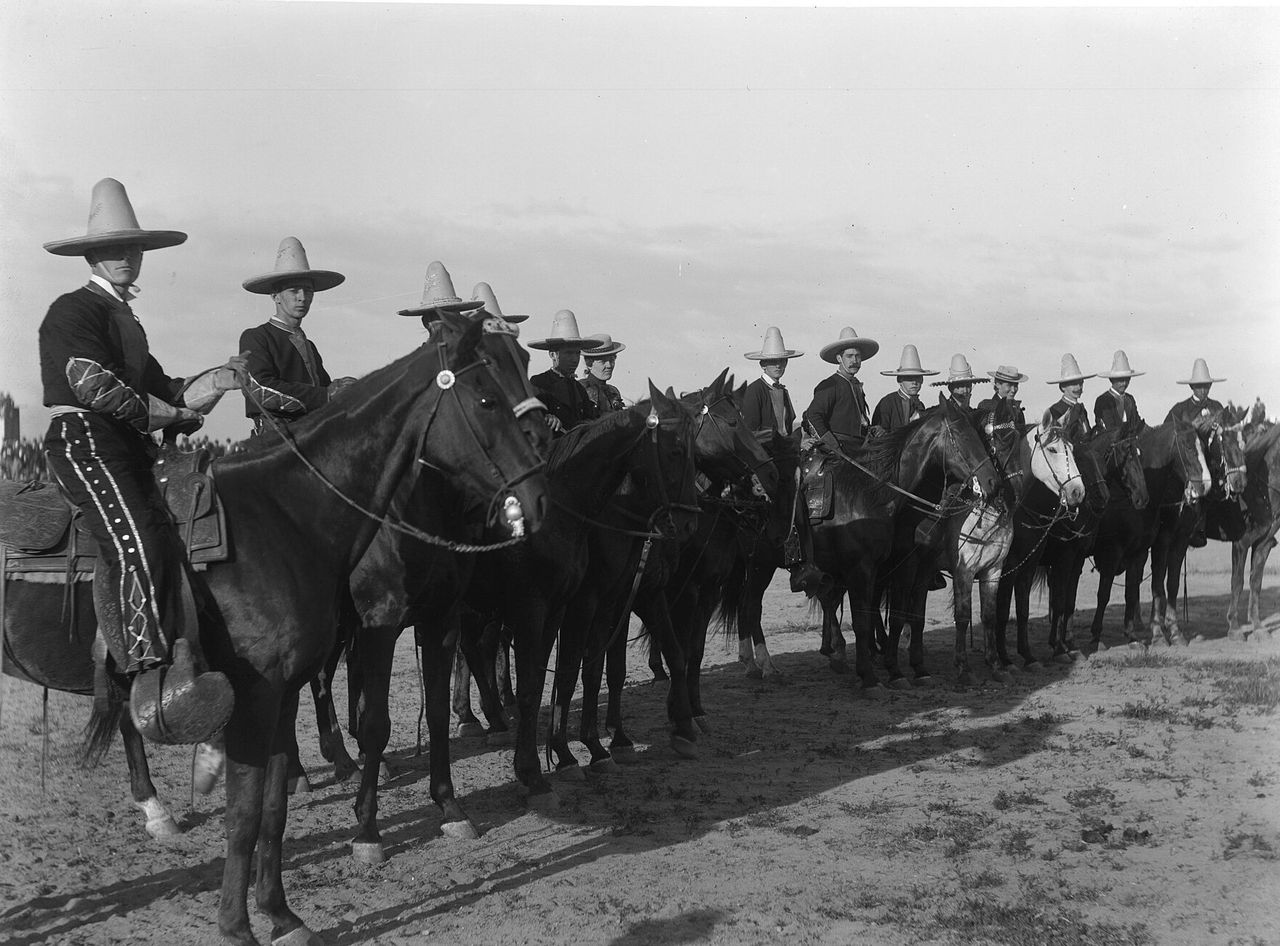
From the vaqueros, the Native and Mexican ranch hands of the Spanish mission ranches. The National Park Service puts it plainly: modern ranching inherited the equipment, vocabulary and folklore of the vaqueros.
Their words are still the cowboy’s words. Lasso comes from lazo, a rope; lariat from la reata, a woven rawhide rope; chaps from chaparejos, the leather leggings; corral, bronco and mustang are Spanish too. Rodeo itself first meant a cattle roundup, not a show.
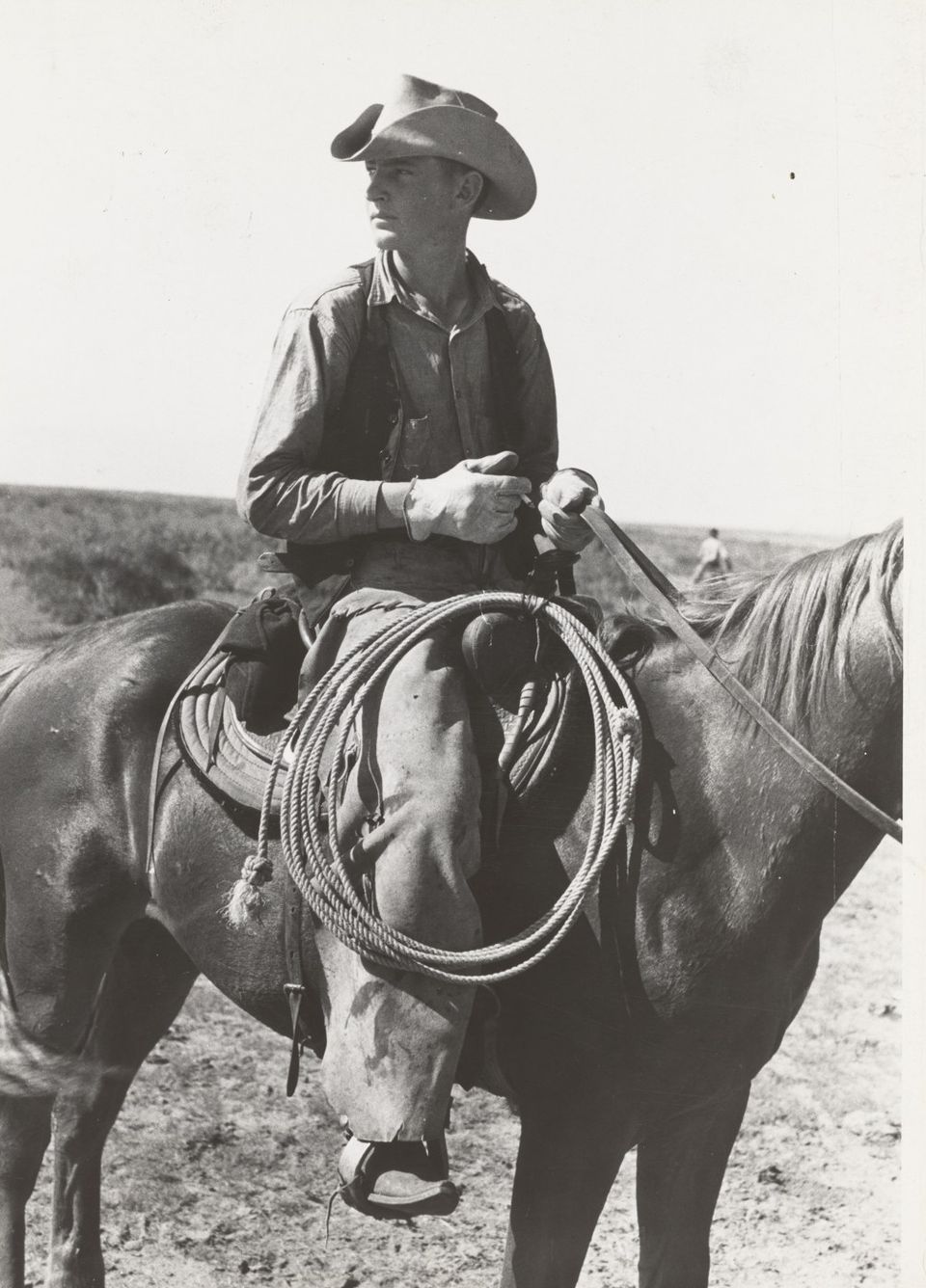
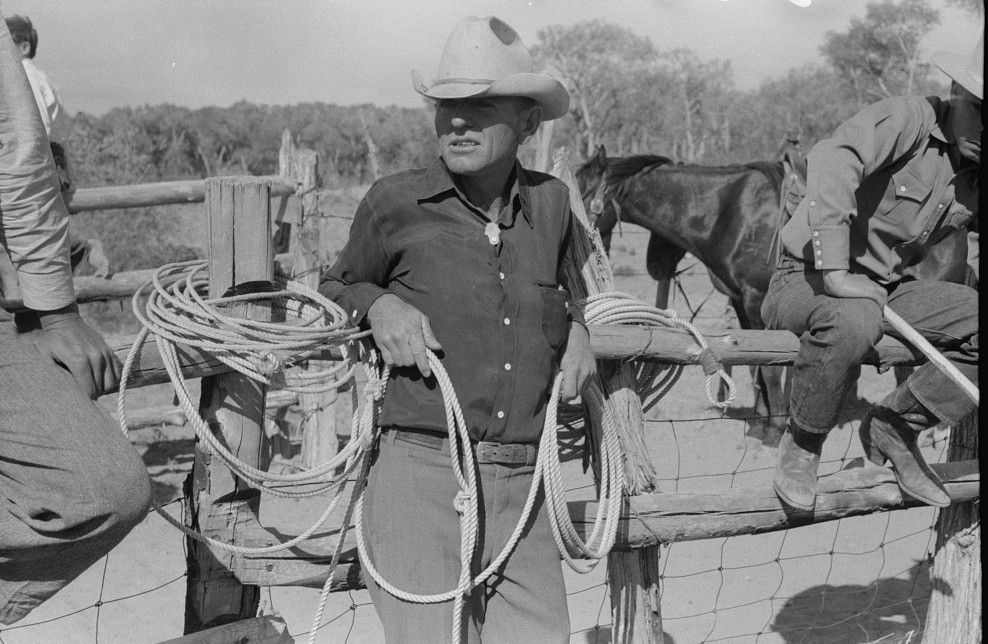
In Russell Lee’s photograph the rider wears work gloves. The western rings sold today borrow from the rest of his gear: the coiled rope of the rope-edged band, the tooled leather of the saddle, the horseshoe under the horse.
Why are western rings silver and turquoise?
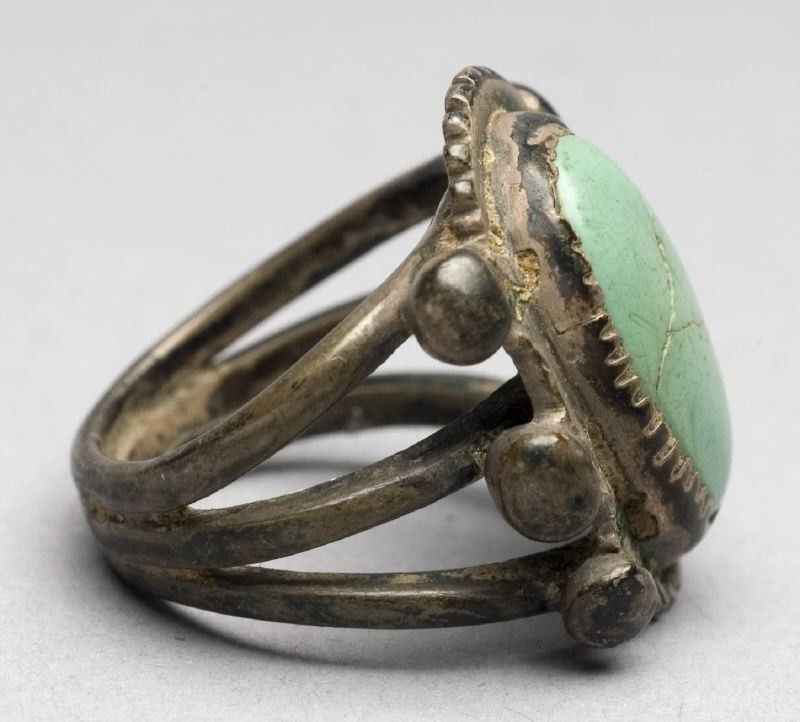
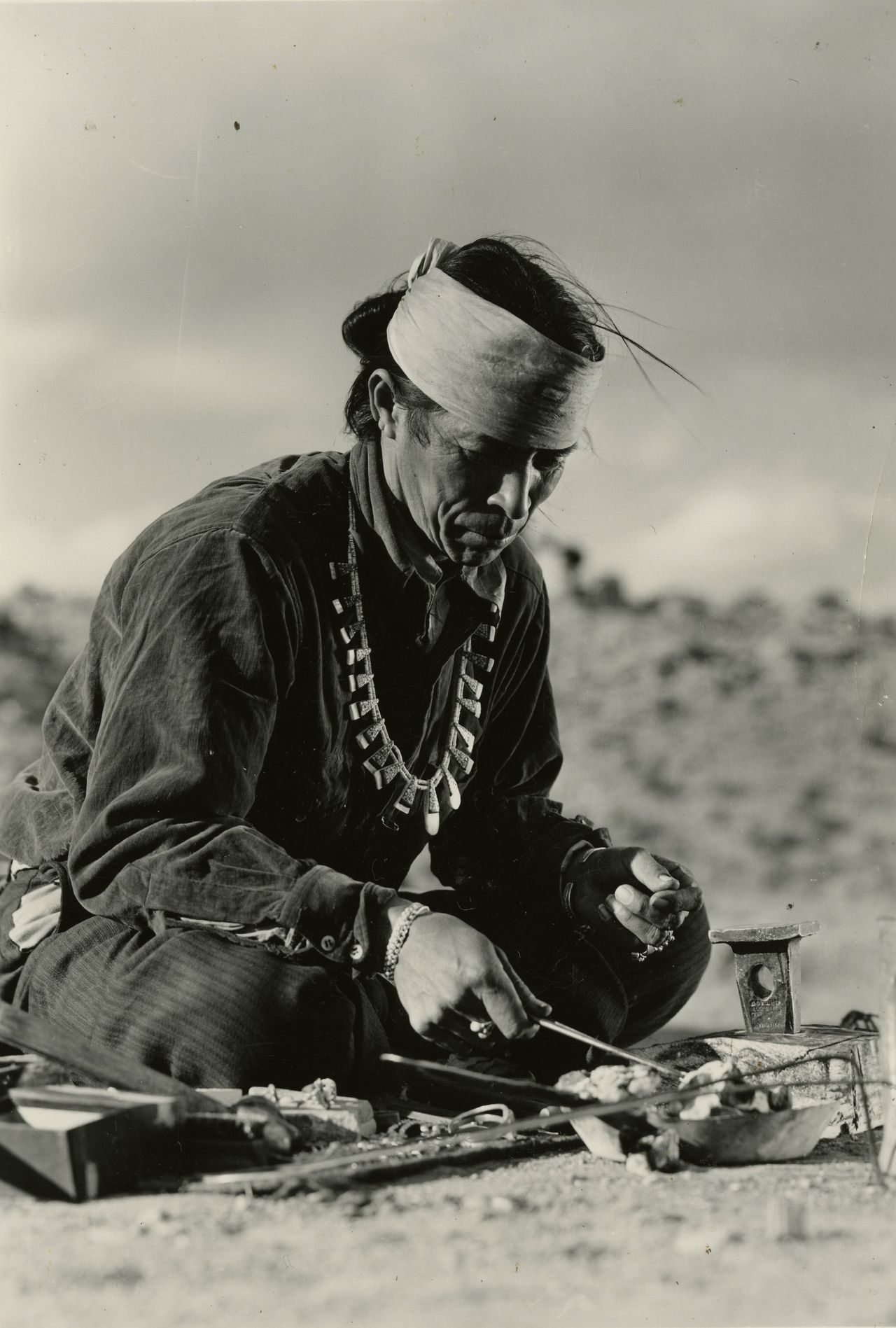
Because the silver jewelry of the Southwest is Native work first. In 1883 Washington Matthews reported to the Bureau of Ethnology that Navajo smiths “work chiefly in silver”, melting Mexican silver dollars, and that their designs “upon bracelets and rings are of great variety”. Silver set with turquoise is still the look of many western rings sold today.
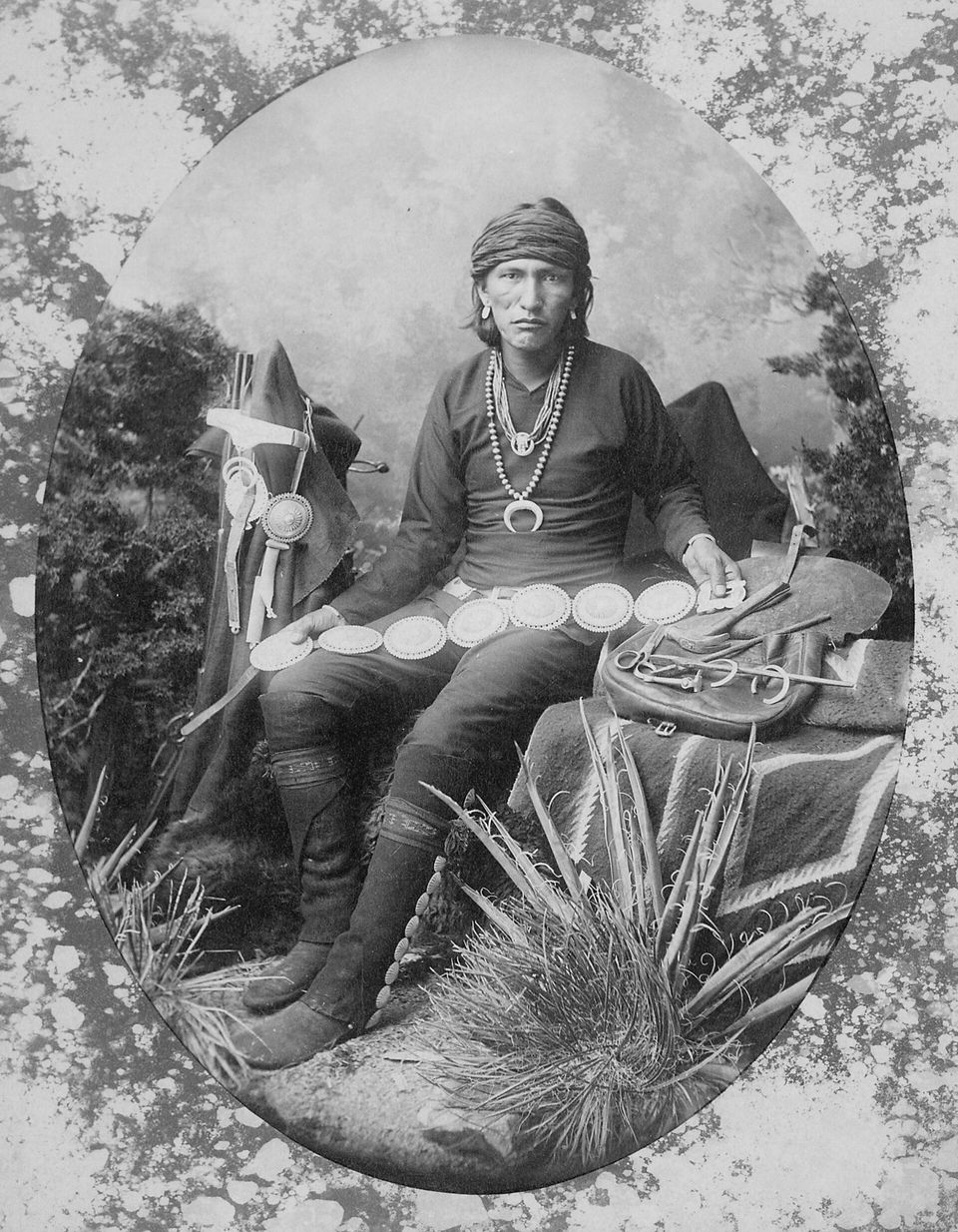
Matthews watched two smiths at work: a forge built on the ground, molds cut in sandstone, two Mexican dollars melted for a single powder charger. He noted that leather belts studded with large plates of silver were favorite pieces and often held forty or fifty dollars’ worth of metal. The belt across this silversmith’s knees, about 1880, is that kind of belt.
For a buyer, one law matters. The Indian Arts and Crafts Act of 1990 makes it illegal in the United States to market a piece as Indian-made when it is not; a first violation can cost an individual up to $250,000 or five years in prison, and a business up to $1,000,000. A silver and turquoise ring sold as Navajo-made should say who made it. One in the same style by anyone else is simply a western ring.
How did the roundup become the rodeo?
The word came from the roundup, and the riding became a contest in front of a crowd. A newsreel shot at Reno, Nevada, in the 1950s shows it: bronc riders out of the chutes, full grandstands, and a banner for a rodeo held every July 4th.
Universal-International made the film for movie-theater newsreels. In the stands are the hats, pressed shirts and belts of western style as townspeople wore it, the same clothes a western ring is worn with.
Where does a gold nugget fit in western style?
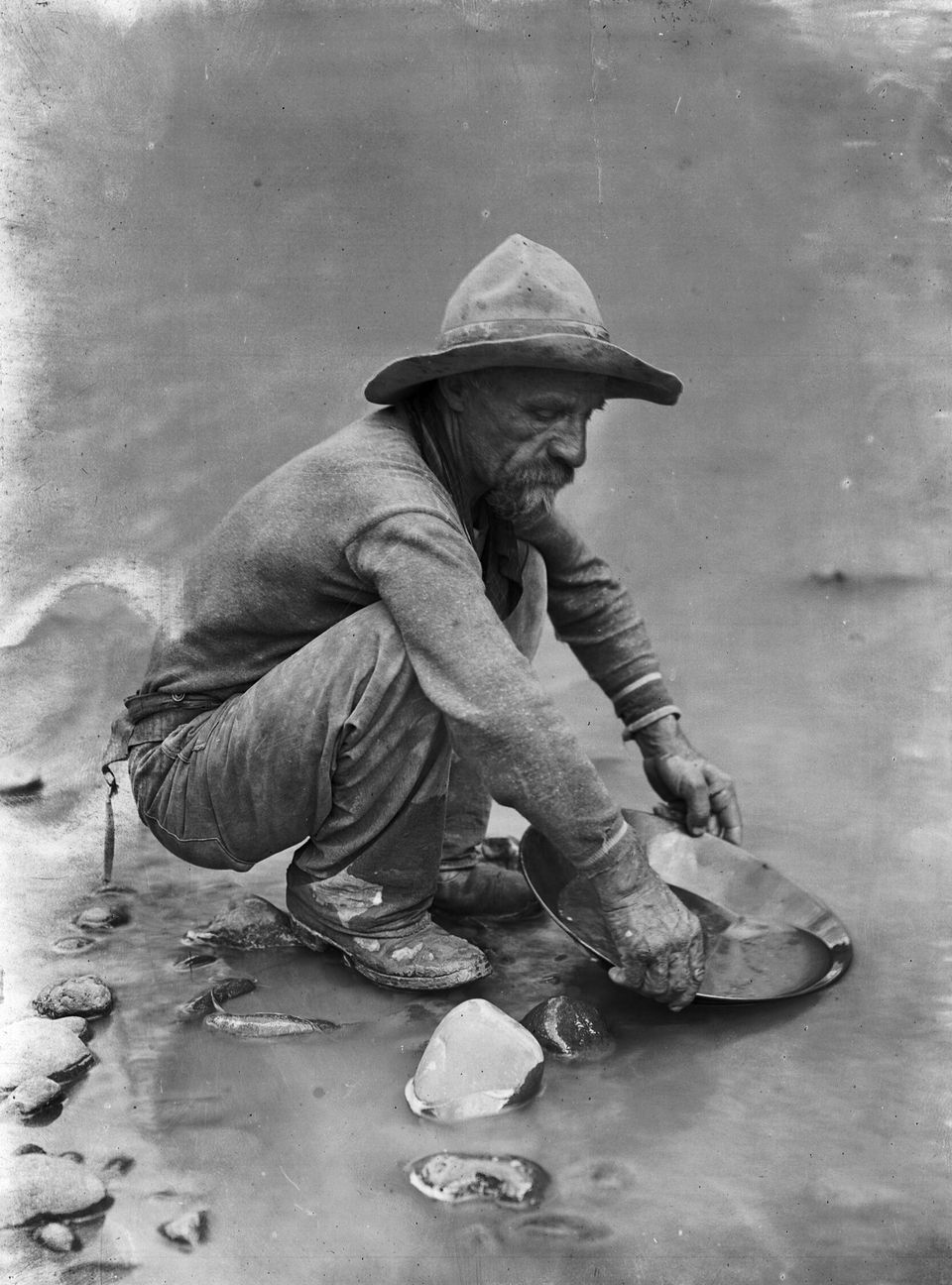
Right at home. The Southwest is gold country as much as cattle country, and a nugget ring carries the shape of a prospector’s find. At Rich Hill, Arizona, in 1863 or 1864, according to many reports, a Mexican member of Pauline Weaver’s party found loose gold on top of the hill while looking for a stray animal.
The US Geological Survey tells what followed: within three months, $108,000 in gold “ranging in size from a pinhead to large nuggets worth hundreds of dollars” was recovered, and about $1 million in placer gold by 1883. California had its own rush from 1848, told in who discovered gold in California, and the gold jewelry of the Dakota hills has its own page, what is Black Hills gold.
The nugget ring itself was in jewelry-store catalogs by 1971, in 14K on the same page as signets and onyx rings; the record is in the 1970s gold nugget ring. With boots and a pressed shirt, it belongs to the same look as the silver.
Which western ring suits working hands?
A head that sits low on the finger. If you rope, build or drive for a living, a ring that rises only a few millimeters over the finger is easier to live with than a tall one, and a broad, low face still reads as a western ring.
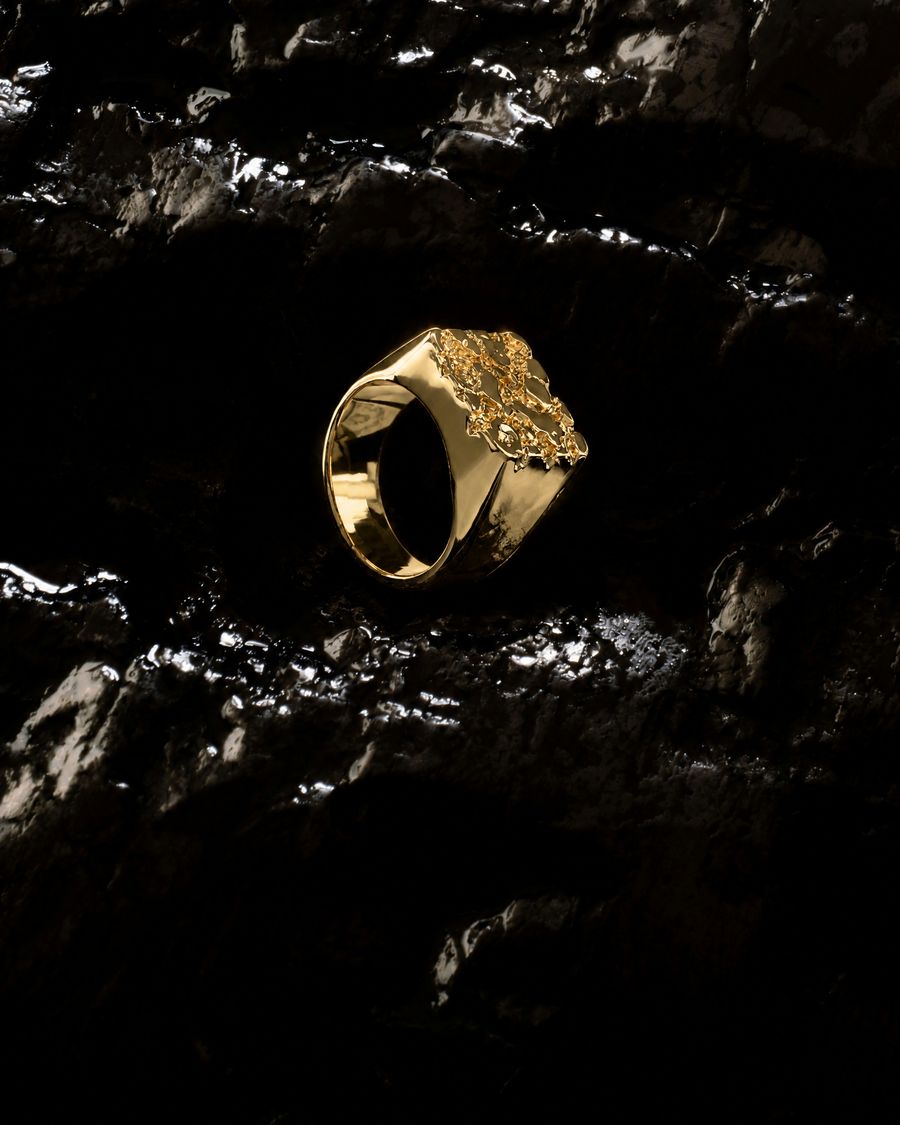
Measured from the finger to the top of the head, our No. 001 Low & Wide rises 2.93 mm, a low crown of rounded nugget peaks that follows the hand. No. 408 Statement XL is a tall square head with nugget plates on top and on all four sides, on thick shoulders, 15.45 mm across and from 17.4 g in 14K at US size 10: a ring for the weekend and the rodeo stands. Why a wide face fits tighter than a thin band of the same size is covered in nugget ring sizing.
What does a gold western signet look like?
A square or rectangular face on broad shoulders, in solid gold, with the texture where a silver ring would carry a stone or an engraving. Ours carry nugget relief on the face, between polished shoulders or running down the sides.
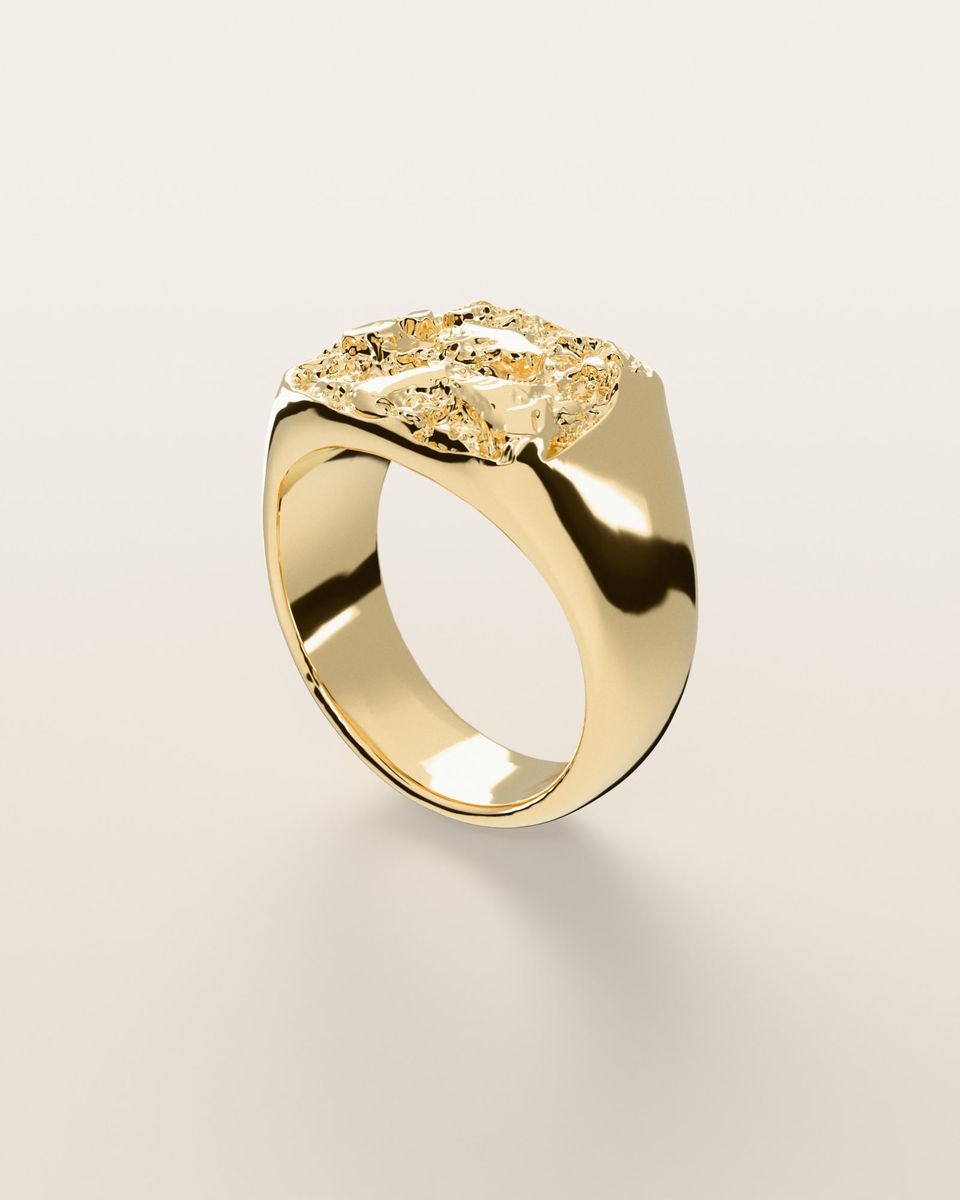
No. 014 The Block is the square nugget signet, named for the block claim, a square claim staked with a post at each corner: a rectangular face 15.3 mm across with irregular nugget relief inside a firm edge. In sterling silver it is $400. Also in solid 10K and 14K gold, one price per metal at every size; in 14K it weighs from 20.1 g at US size 10. Each ring is cast to order in your size by our workshop.
The same family runs wider and longer: No. 406 Wide Face sets a broad face across the finger, like a bench of gravel on a valley side, and No. 504 Monolith runs a long face along it, framed by polished steps. See No. 014 The Block, or all the gold nugget signet rings side by side.
More on the same subject: nugget ring styles and icons.
Sources
- Rings listed under “cowboy rings” and “western rings” on the pages of five US western-wear stores and jewelers, read 8 November 2026. Our research notes.
- National Park Service, San Antonio Missions, Rancho de las Cabras (the vaqueros and the Spanish words of ranching), last updated May 27, 2025. Read 8 November 2026.
- Washington Matthews, “Navajo Silversmiths”, Second Annual Report of the Bureau of Ethnology, 1880-1881 (Washington, 1883), pages 167-178. Project Gutenberg text, read 8 November 2026.
- US Department of the Interior, Indian Arts and Crafts Board, The Indian Arts and Crafts Act of 1990 (P.L. 101-644). Read 8 November 2026.
- Maureen G. Johnson, Placer Gold Deposits of Arizona, US Geological Survey Bulletin 1355 (1972), district 61, Weaver (Rich Hill), pages 60-61. Read 8 November 2026.
- Russell Lee, Cowboy on horse with equipment on cattle ranch near Spur, Texas, May 1939, The New York Public Library. Public domain.
- Navajo silversmith with examples of his work and tools, 1880, Office of Indian Affairs, National Archives, NAID 518913. Public domain.
- Universal-International Newsreel, [Reno Rodeo], 1950s, Prelinger Archives, Internet Archive. Public domain.
- Plummer’s Vaquero Club during Los Angeles Fiesta, 1901, California Historical Society Collection, USC Libraries Special Collections, CHS-1452. Public domain.
- Museum of Ethnography, Stockholm, finger ring, Navajo, silver and turquoise, 1924.04.0005. CC0.
- Joe Lee, Navajo Silversmith and Medicine Man, Arizona, 1938, Office of Indian Affairs, National Archives, NAID 290019818. Public domain.
- Alan Shilin Productions, Pueblo Heritage, 1950, Prelinger Archives, Internet Archive. Public domain.
- Russell Lee, Cowboy at rodeo, Quemado, New Mexico, June 1940, Farm Security Administration, Library of Congress. Public domain.
- Placer miner on the Colorado River near Lees Ferry, ca. 1930, California Historical Society Collection, USC Libraries Special Collections, CHS-4707. Public domain.


