Guide · History
Who discovered gold in California?
One name gets the credit, and the record mostly agrees with it. But the man who started the Gold Rush was not the first to find gold in California, he was not sure of his own date, and the first piece he picked up was spent at a store.
Who discovered gold in California?
James W. Marshall, a carpenter building a sawmill for John Sutter at Coloma, found gold flakes in the mill’s tailrace on January 24, 1848, and that find started the California Gold Rush. He was not the first: Francisco López found gold in Placerita Canyon, north of Los Angeles, on March 9, 1842.
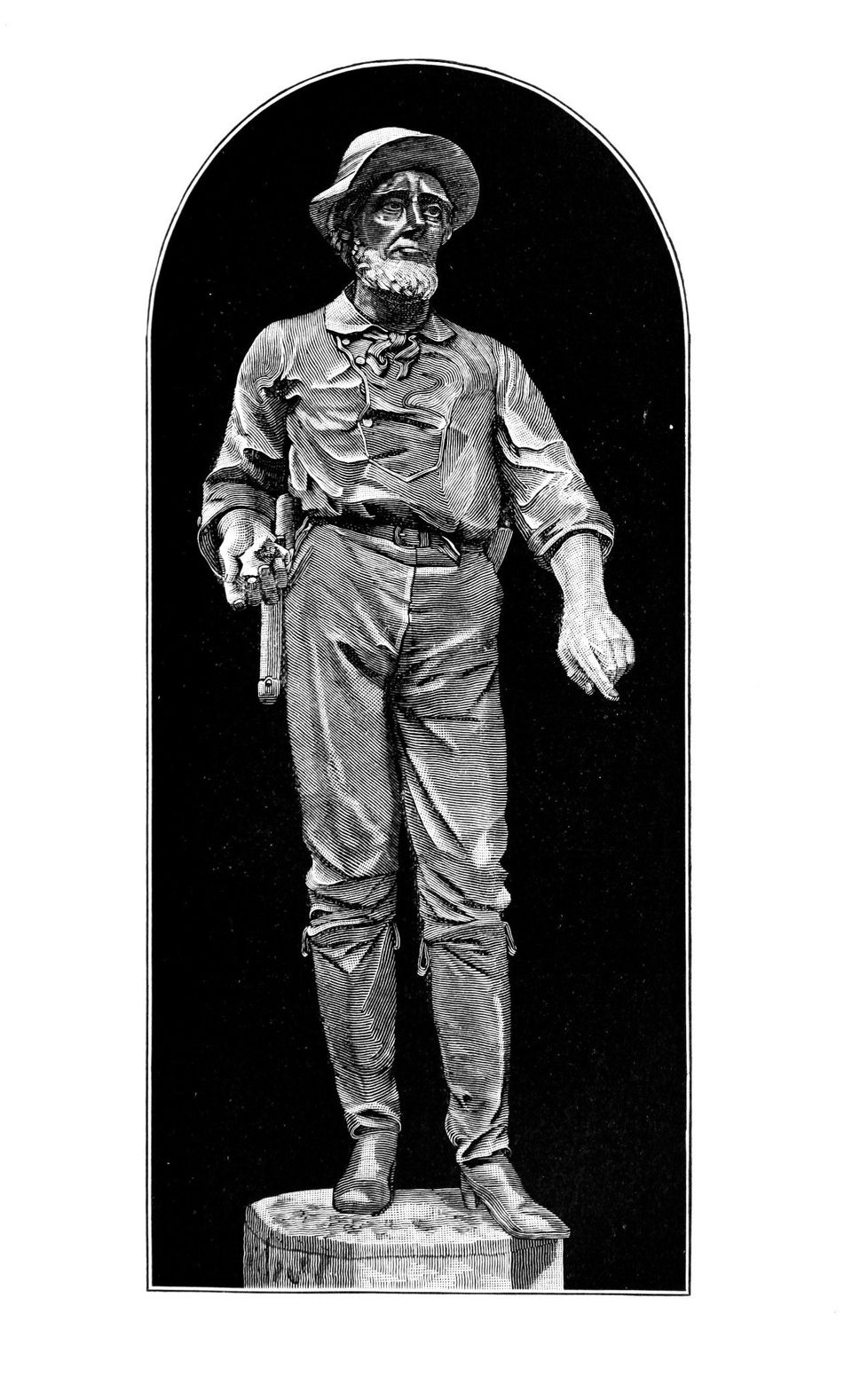
The state of California recognizes both. López’s find is California Historical Landmark No. 168, “California’s first authenticated gold discovery”. Marshall’s is landmark No. 530, and the statue of him on the hill above Coloma, landmark No. 143, points at the spot. The difference is what followed: López’s placers were worked by miners from Sonora, while within four years of Marshall’s find California’s population passed 200,000.
1842: Francisco López and the wild onions
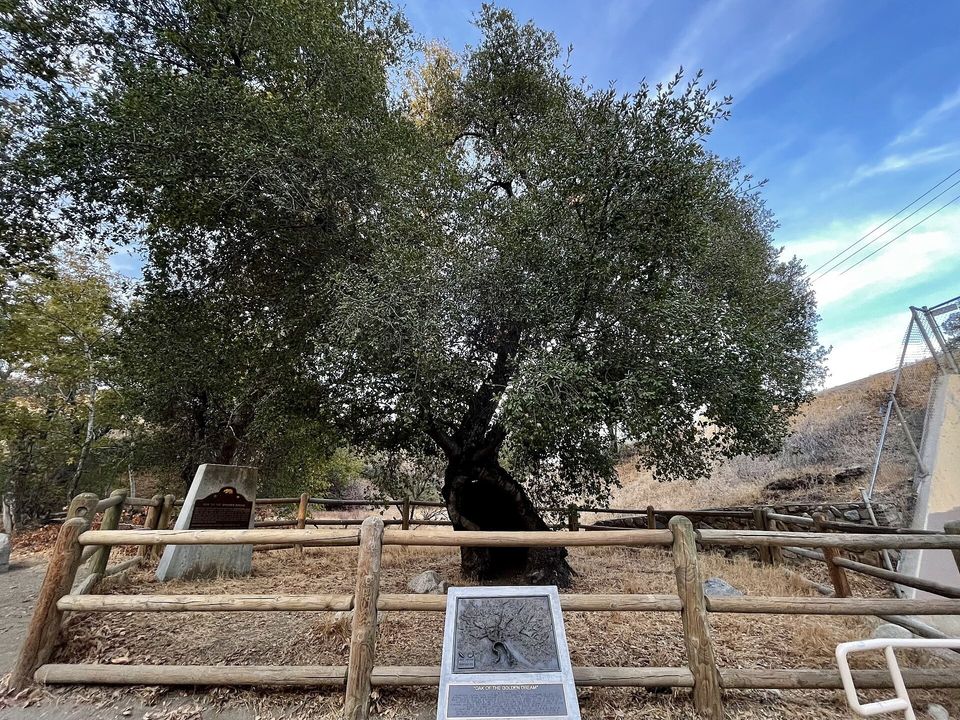
On March 9, 1842, Francisco López was gathering wild onions near an oak tree in Placerita Canyon, near Newhall, north of Los Angeles, when he saw gold particles clinging to the roots of the bulbs. It is California’s first authenticated gold discovery, six years before Marshall’s.
The state’s landmark text says the San Fernando placers and nearby San Feliciano Canyon were then worked by miners from Sonora, in Mexico, who used panning, sluicing and dry washing. California was still part of Mexico. The find made no noise in the wider world, and the State Parks brochure for Coloma draws the lesson: when Marshall found his flakes, “this was not the first time gold had been discovered in California, and there was no reason to assume that this find was particularly important.”
The site is now Placerita Canyon State and County Park, 4.6 miles northeast of Newhall; the state plaque stands at Interstate 5 and Lyons Avenue.
1847: a sawmill at Coloma
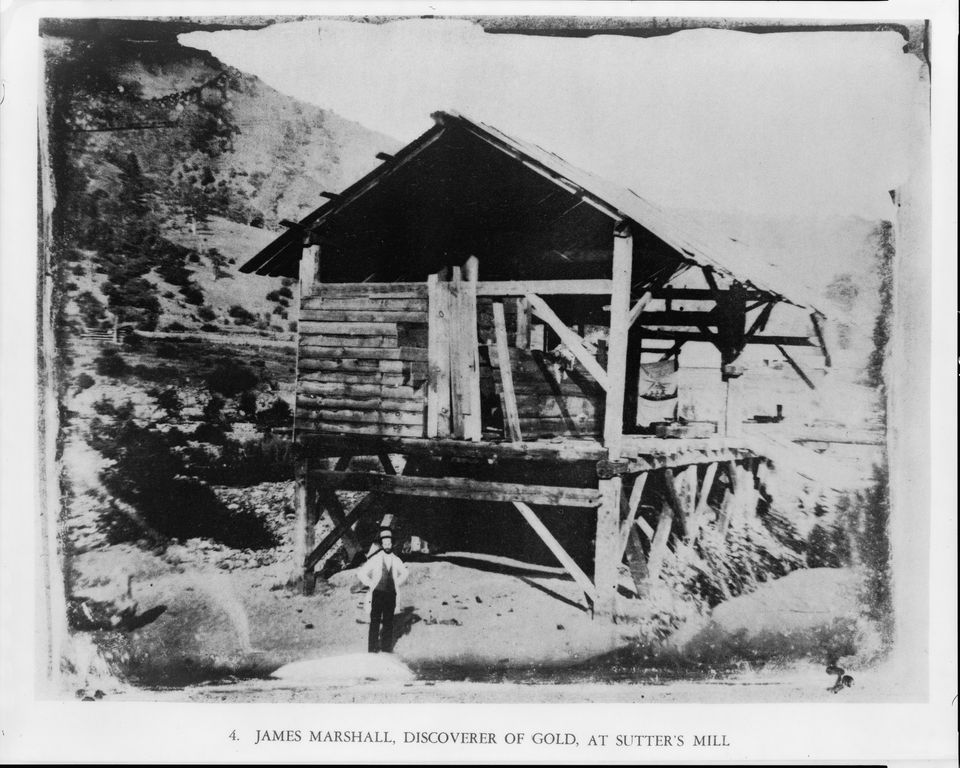
Marshall was at Coloma because of lumber. In 1847 he and John Sutter went into partnership on a sawmill in the Coloma Valley, 45 miles east of Sutter’s fort, where the South Fork of the American River gave power and the ponderosa pines gave timber. Sutter put up the money; Marshall built and ran the mill.
Marshall was a New Jersey carpenter who had come to California in 1845 and was hired at Sutter’s fort as a wheelwright and carpenter. He started the mill in the fall of 1847 with a crew that, the State Parks brochure says, included local Indians and members of the US Army’s Mormon Battalion.
The detail that matters is the tailrace, the channel that carries water away from a mill wheel. By January 1848 it was too shallow: water backed up and the wheel would not turn properly. So each day the Indian laborers loosened the rock in the channel, and each night water was let through it to wash the loose debris away. Every morning, Marshall walked down to see what the water had done.
January 24, 1848: flakes in the tailrace
On the morning of January 24, 1848, inspecting the tailrace, Marshall saw shiny flecks in the water. He bent them with his fingernail and pounded them with a rock; they flattened instead of breaking. The camp cook, Jenny Wimmer, boiled a piece in her lye soap kettle, and it came out still bright.
The date comes from one of the workers, not from Marshall. Henry Bigler wrote in his diary: “Monday 24th. This day some kind of mettle was found in the tail race that looks like goald, first discovered by James Martial, the Boss of the Mill.” Marshall himself, telling the story in 1857, put it “on or about the 19th of January”, adding that he was not certain to the day.
His tests were a miner’s reasoning. He knew two bright yellow minerals: iron pyrite, “very bright and brittle”, and gold, “bright, yet malleable”. Between two rocks, he wrote, it “could be beaten into a different shape, but not broken.” Then the soap: in papers kept with the Bancroft Library’s nugget, Jenny Wimmer writes that she “boiled it in a kettle of soap all day”. Gold does not tarnish, so it came out as bright as it went in. When a carpenter named Scott disputed the find, Marshall answered, by the State Parks account, “I know it to be nothing else.”
There is a popular story that he bit it; his own account does not mention it. What happened to the first piece is in it: “The first piece of gold which I found, weighed about fifty cents.” Mrs. Wimmer, “being my treasurer”, used $440 of his money to buy store goods, “and among which was the first piece of gold which I had found. Where that went or where it is now, I believe that nobody knows.”
Two institutions hold gold believed to come from that morning. The Smithsonian has a tiny flake, shown in our guide what is a nugget ring. The Bancroft Library at UC Berkeley holds the “Wimmer nugget”, which it believes is the piece that started the Gold Rush; the one on display is a facsimile.
Four days later: acid at Sutter’s Fort
Four days later Marshall rode to Sutter’s fort with samples. Sutter tested them with aqua fortis (nitric acid) from his apothecary shop and read the article “gold” in his Encyclopedia Americana. Both men agreed it was gold, and they agreed to keep it secret until the mill was running.
Sutter told the story himself in 1857. Marshall arrived wanting to speak “secretly”; some of the mill hands, he wrote, “were laughing at him and called him a crazy man”. Sutter declared the metal “gold of the finest quality, of at least 23 carats”. That figure is his claim, not a measured assay. He asked the crew to keep the find quiet for six weeks so he could finish a flour mill; he admits he did not expect the secret to hold.
He also had a ring made from that gold. Sutter wrote that he had “a heavy ring made, with my family’s coat of arms engraved on the outside, and on the inside of the ring is engraved, ‘The first gold, discovered in January, 1848.’” The man who paid for the mill wore its first gold on his finger, with the date inside.
The State Parks brochure notes the timing: nine days after Marshall’s discovery, at the end of the Mexican-American War, the United States was granted California by treaty. Its non-Indian population was about 14,000.
May 1848: “Gold! Gold from the American River!”
The secret lasted a few months. In May 1848 Sam Brannan, who ran a store at Sutter’s fort, walked the streets of San Francisco waving a bottle of gold and shouting “Gold! Gold! Gold from the American River!” By the end of May the town was reported to be “half empty”.
Some of the Mormon mill workers had given Brannan a tithe of the gold they found, and Sutter had already bragged about the discovery in a letter to General Mariano Vallejo. By July 1848 the population around Coloma had jumped to 4,000. Sutter’s workers left him, “from the clerk to the cook”, in his words, and that December floods led him to sell his share of the mill.
December 5, 1848: the president confirms it
The news became official on December 5, 1848. In his annual message that day, President James K. Polk told Congress that the accounts of gold in California were “of such an extraordinary character as would scarcely command belief” were they not confirmed by officers who had seen the mines.
Polk reported that when the army’s commanding officer visited the gold district in July, “there were about 4,000 persons engaged in collecting gold.” An army officer had carried a tea caddy of gold to Washington. After the president confirmed the rumors, the State Parks brochure says, thousands joined the trek to the Gold Country: the forty-niners.
1849 to 1852: the rush, and who paid for it
Between 1848 and 1852 California’s population grew to more than 200,000. Over the next 50 years, roughly 125 million ounces of gold came out of its hills. For the California Indians of the gold country, the rush meant losing their fishing and gathering sites to the gold-seekers.
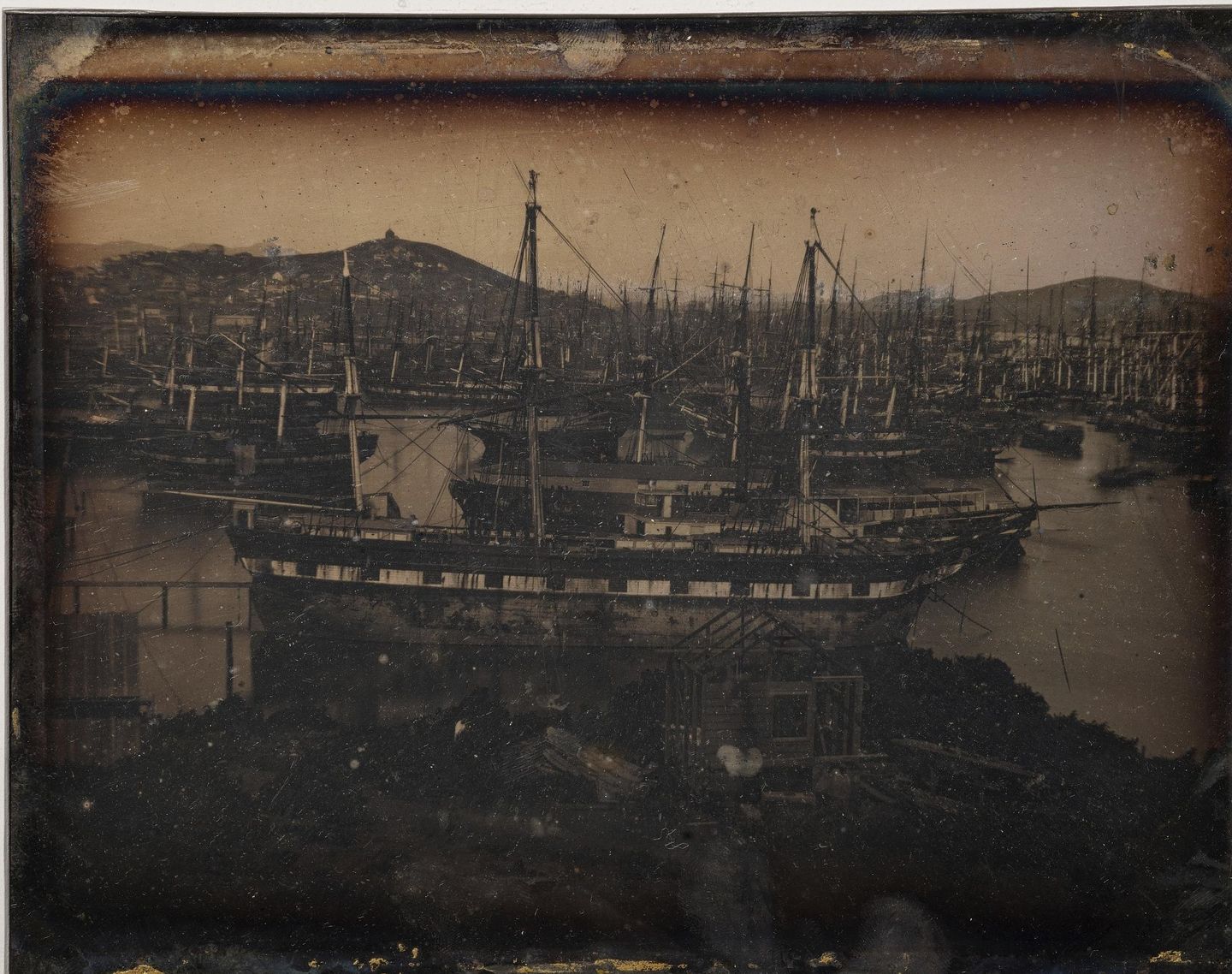
Coloma was Nisenan and foothill Miwok country; they called their home on the American River “Cullumah”. The State Parks brochure says diseases brought by newcomers had already nearly decimated them by the late 1830s, and that by 1849 the survivors of disease and conflict with settlers had dispersed to remoter parts of the Gold Country. A few turned to mining, and some worked for Sutter.
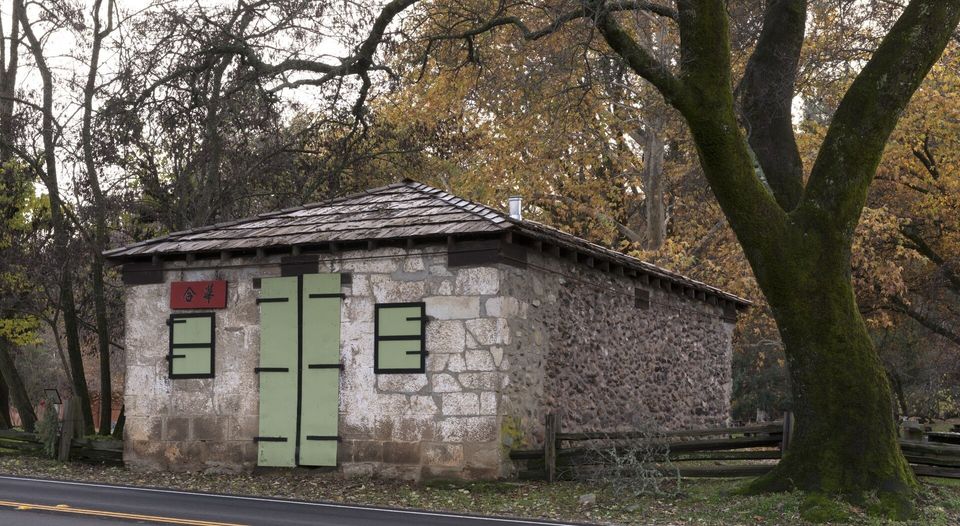
Chinese miners came too, about 50 at Coloma in the 1850s by the brochure’s count. They were so good at finding gold that other miners complained, and the hostility helped bring in taxes and laws enforced only against “foreign” miners. In 2019 California’s governor issued a formal apology to California Native Americans for the state’s historical wrongdoings and created a Truth and Healing Council.
1885: what became of Marshall
Marshall got little from his find. The sawmill was tangled in legal trouble and abandoned after 1850, he searched for more gold with little success, and a state pension voted in 1872 was cut and then ended in 1878. He was working as a blacksmith near Kelsey when he died on August 10, 1885, aged 75.
In 1857 he bought fifteen acres at Coloma for $15 and planted a vineyard; his wine won an award at the county fair by 1860. A series of setbacks in the late 1860s sent him prospecting again, and a lecture tour left him penniless in Kansas City. The pension was $200 a month for two years, then half that for four more, and it stopped amid criticism of his drinking. Andrew Monroe dug his grave on the hillside above Coloma. According to the Monroe family’s oral history, his mother, Nancy Gooch, had been brought to Coloma enslaved in 1849, and by 1861 she had saved enough to buy her son’s freedom.
In 1890 the state placed a monumental statue over the grave, California’s first State Historic Monument. The figure of Marshall on top points to the place of discovery on the South Fork of the American River.
Where is the discovery site today?
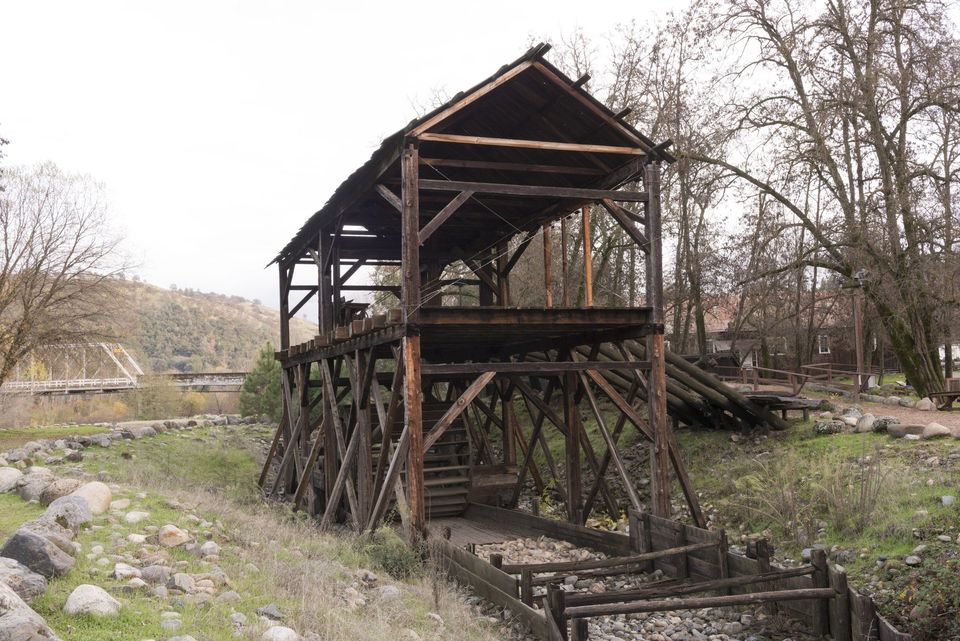
Coloma is now Marshall Gold Discovery State Historic Park, created in 1942. A trail leads to the discovery site, a full-size replica of the sawmill stands nearby, and recreational panning, with your hands and a pan only, is allowed in designated areas.
The original mill was abandoned, torn down for its lumber, and lost in the floods of the 1850s. The Society of California Pioneers located and marked its site in 1924, and the original tailrace was unearthed in 1947 after the land became a state park. The replica was finished in 1968. The panning rule is the one in the park’s 2013 brochure; check the park’s page before you go.
Gold that a river has freed from its rock and left in its gravel, like Marshall’s flakes, has its own name in the trade: placer gold. It was found in America long before 1848, at a creek in North Carolina: the first gold found in the United States.
A ring that starts at the tailrace
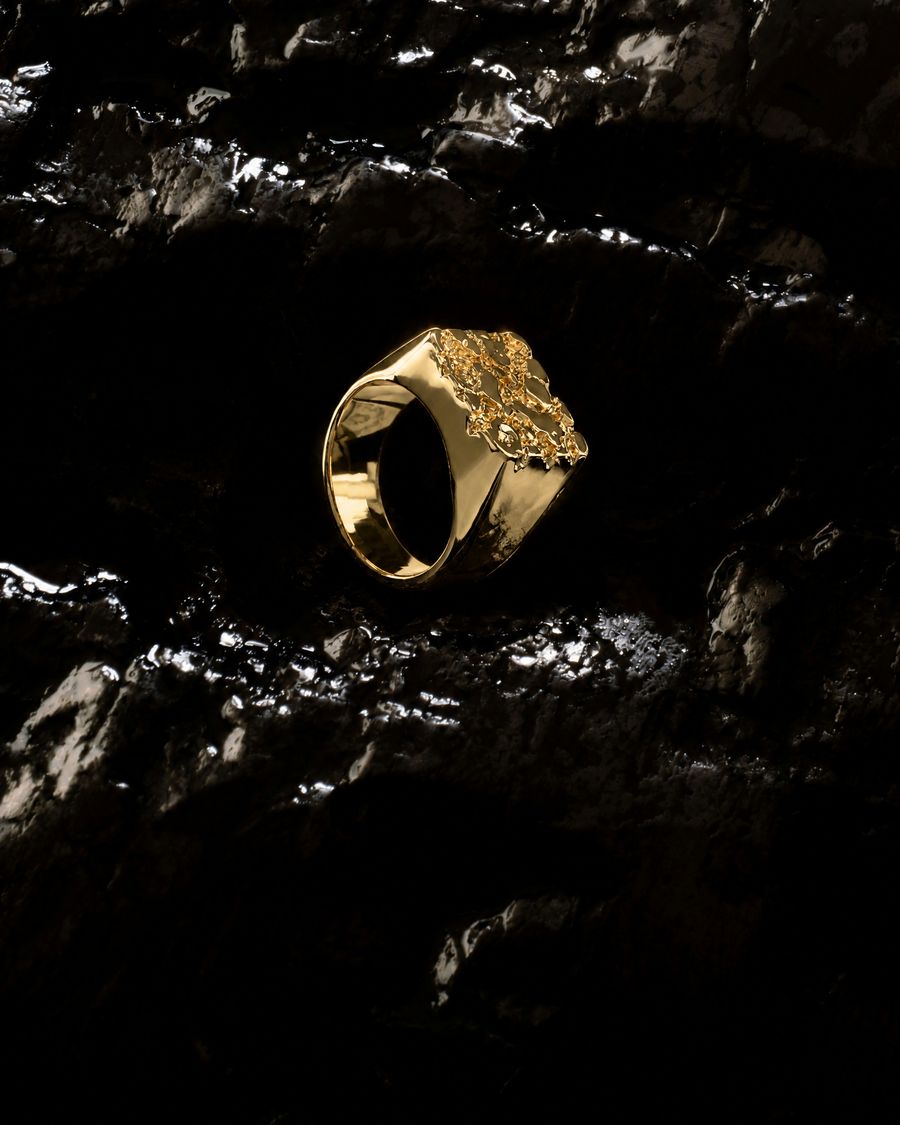
One of our rings takes its shape from that channel. No. 440 Classic Taper is 12 mm wide on top and narrows to 4 mm underneath: nugget plates on the wide part, polished gold on the narrow part, the mill above and the channel below. It comes in sterling silver, 10K or 14K gold.
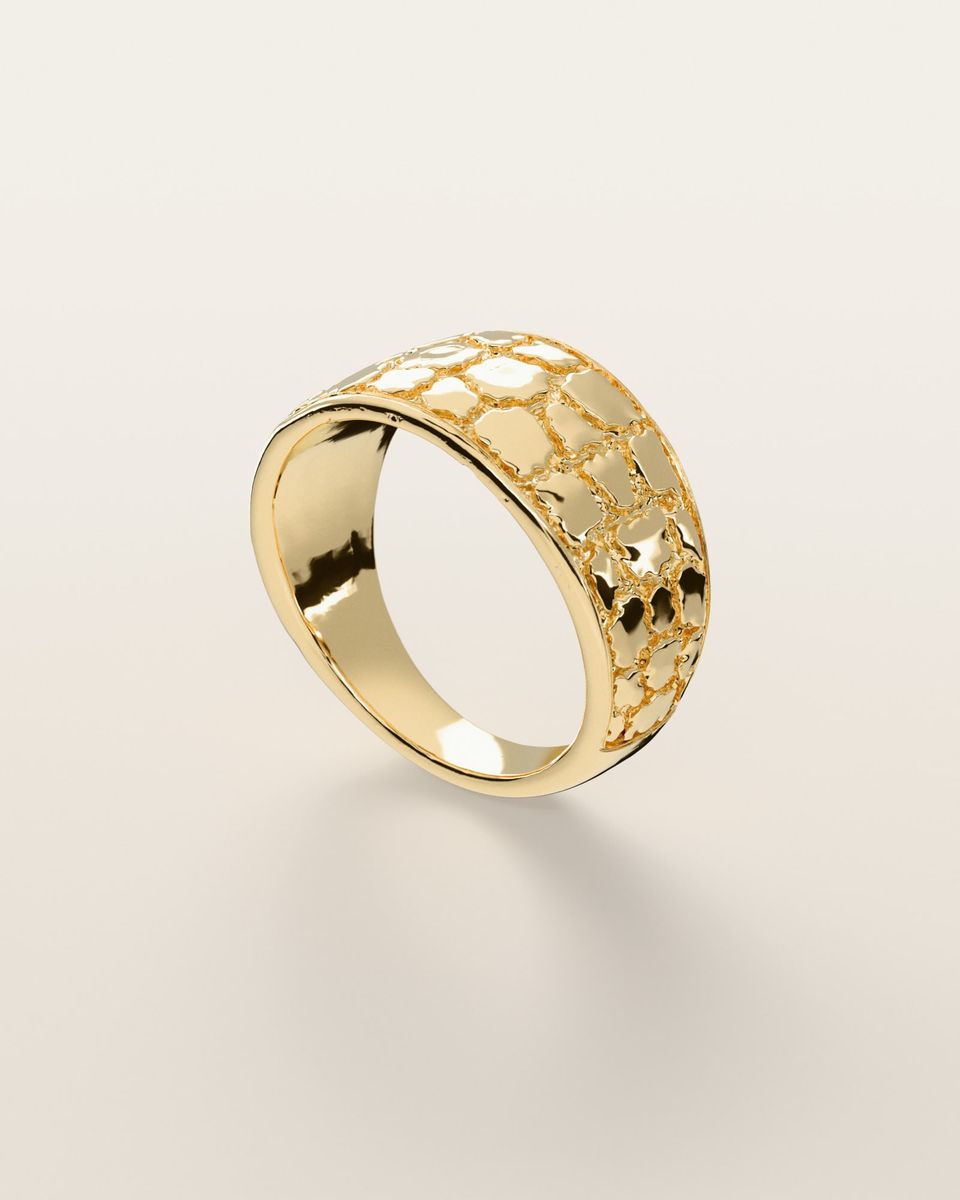
See the ring and its story: No. 440 Classic Taper. More answers about gold and its history: gold, explained.
More on the same subject: gold rushes.
Sources
- California State Parks, Marshall Gold Discovery State Historic Park, brochure (2004, rev. 2013): the partnership and the mill site, the crew, the tailrace, January 24, the fingernail, rock and lye tests, Bigler’s diary, “not the first time”, the fort four days later, Brannan, “half empty”, 4,000 in July 1848, the treaty, 14,000 and 200,000, 125 million ounces, the Nisenan and Miwok, Chinese miners, Marshall’s later life and pension, the Monroe family, the 1890 monument, the park, the 1968 replica, panning with hands and pan. Read 18 October 2026.
- California Office of Historic Preservation, landmarks No. 168, Oak of the Golden Dream (López, March 9, 1842), No. 530, Sutter’s Mill Site (1924, the tailrace unearthed in 1947) and No. 143, Marshall Monument (the statue points to the place of discovery). Read 18 October 2026.
- James W. Marshall, account of the discovery given to J. M. Hutchings, Hutchings’ California Magazine (1857), transcription: “on or about the 19th of January”, pyrite and gold, the two rocks, the lye, nitric acid at the fort, “about fifty cents”, the $440, “nobody knows”. Read 18 October 2026.
- John A. Sutter, “The Discovery of Gold in California”, Hutchings’ California Magazine (November 1857), Museum of the City of San Francisco: the secret, “a crazy man”, aqua fortis and the Encyclopedia Americana, “23 carats”, the ring, the six weeks, “from the clerk to the cook”. Read 18 October 2026.
- UC Berkeley, news releaseof January 13, 1998, quoting Jenny Wimmer (“I boiled it in a kettle of soap all day”), and The Bancroft Library, exhibits (a facsimile of the “Wimmer” nugget on display). Read 18 October 2026.
- James K. Polk, Fourth Annual Message, December 5, 1848, The American Presidency Project, UC Santa Barbara.
- Office of Governor Gavin Newsom, Governor Newsom Issues Apology to Native Americans for State’s Historical Wrongdoings, Establishes Truth and Healing Council, June 18, 2019. Read 18 October 2026.
- Royal Society of Chemistry, Periodic Table: Gold(gold does not tarnish).
- Library of Congress, Prints and Photographs: James Marshall, discoverer of gold, at Sutter’s Mill and Carol M. Highsmith, the tailrace at Sutter’s Mill, Coloma (2012). Both public domain.